One novel, many ways in一部红楼,多种入口
Choose your lens换个视角读
1 / 6: Straussian Reader · 施特劳斯式读者
Intellectual lenses思考的视角
Straussian Reader施特劳斯式读者
Summary: Jia Baoyu is the cherished son of a wealthy aristocratic family that expects him to become a distinguished scholar and official. He prefers poetry and the company of the young women around him, especially his orphaned cousin Lin Daiyu, with whom he falls in love. His elders choose another cousin, the capable and dutiful Xue Baochai, as his wife. They deceive him into believing he is marrying Daiyu; Daiyu dies as the wedding takes place. Meanwhile, corruption and extravagance bring the Jia household to disgrace and confiscation. Baoyu eventually passes the examination his family has wanted him to take, then leaves to become a monk.
概括: 贾宝玉是贵族贾家的宠儿,长辈盼他读书做官,光耀门楣。他却更喜欢诗词,也更愿意和身边的女孩子相处,尤其是与他相爱的、父母双亡的表妹林黛玉。长辈为他选定的妻子,是另一位稳重能干、恪守礼数的表姐薛宝钗。他们让宝玉以为自己娶的是黛玉,实际送入新房的却是宝钗;黛玉在婚礼举行时病逝。与此同时,贾府因奢靡与种种不法走向败落,遭到查抄。宝玉后来考中了举人,却离家出家了。
On the surface, this can look like a warning about a spoiled son who wastes his advantages. His introductory portrait even calls him a disappointment to family and state. But follow what the story makes us care about: his attention to people whom rank allows others to dismiss, his attachment to a woman who understands him, and the devastation caused by a supposedly suitable marriage. The elders entrusted with teaching him proper conduct arrange that marriage through a lie. The family judging its wayward son is itself on trial.
表面上,这似乎可以讲成一个纨绔子弟辜负家族厚望的故事。第三回介绍宝玉的词,甚至说他“于国于家无望”。但顺着情节看,读者牵挂的恰恰是他被视为不成器的那些地方:他在意身份低微的人,爱那个懂得自己的女孩,而一桩合乎长辈心意的婚事却带来了毁灭。负责教他做人守礼的人,亲手用谎言办成了这场婚礼。原来,被审问的还有那个正在审判“不肖子”的家族。
Read this way, the underlying charge is that becoming the “good son” this household wants requires surrendering the loyalties that make Baoyu worth caring about. The ending sharpens the charge: he proves he can meet the family's standard, then refuses the life it offers. His departure leaves Baochai suffering too. The story exposes a family order in which obedience can betray the people one loves, while escape cannot undo the damage.
按这一层读法,书里更难直说的指控是:宝玉若要成为家族认可的“好儿子”,就得放弃那些让他值得被爱的情意。结尾把这层意思挑明了:他考得中,却不肯留下来过那种人生。他的离开又让宝钗受苦。这个家族秩序的困局正在这里:顺从可能要辜负所爱的人,出走也无法让已经受伤的人重新过好。
About the novel and these summaries原著与概括说明
What is Dream of the Red Chamber about? Here are six ways to answer someone who has never read it. Each summary introduces the story on its own; the style changes what it brings into focus, from the plot in one breath to the argument hidden beneath a family tragedy.
《红楼梦》讲了什么?下面用六种写法,回答一个从没读过这本书的人。每篇概括都可以独立阅读;写法改变的是重点:可以一口气交代故事,也可以从家族悲剧里,读出表面说法之下更难直说的意思。
The source is Cao Xueqin’s Dream of the Red Chamber (红楼梦), also known as The Story of the Stone. These summaries follow the familiar 120-chapter version, including the ending in its final forty chapters, rather than attempting to reconstruct Cao’s intended ending.
原著是曹雪芹的《红楼梦》,又名《石头记》。以下概括采用通行的一百二十回本,包括后四十回的结局,不尝试据此还原曹雪芹原拟的结局。
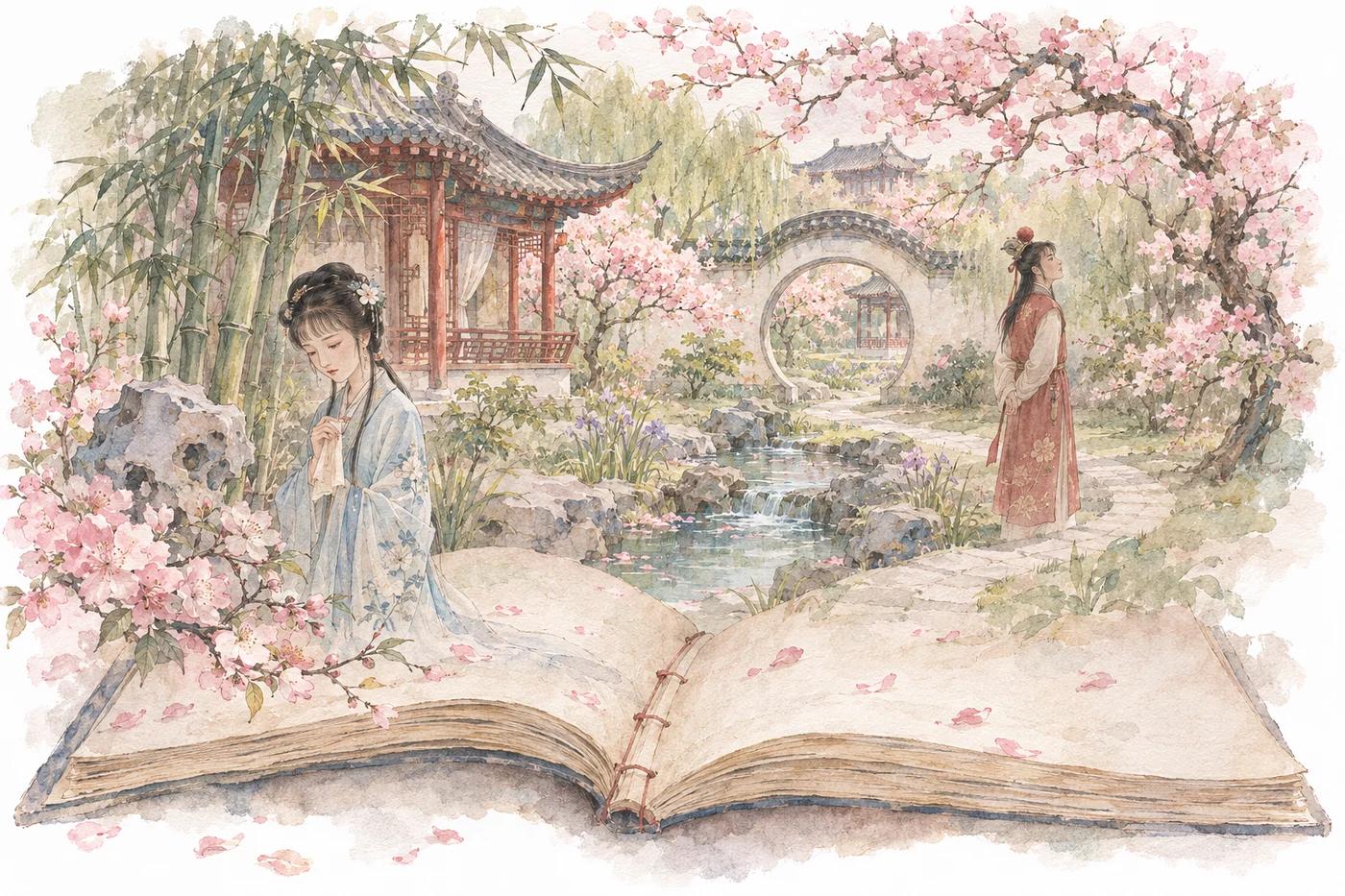
Each version has a writing prompt, a watercolor, and an English–Chinese summary. Interpretive claims belong to the particular reading; the Socratic exchange is an invented conversation between a newcomer and a reader of the book. Plot references include Daiyu’s arrival, life in the garden, the marriage, Daiyu’s death, the confiscation, and Baoyu’s departure.
每种写法都有写作提示、水彩插画和中英对照的概括。解读性的判断属于相应读法;苏格拉底式问答是一个没读过原著的人与读过的人之间的虚构对话。主要情节可参见黛玉进府、入住大观园、宝玉成婚、黛玉之死、贾府被抄与宝玉离去。