David Jiang · AI product engineer & founder
AI products, from
problem to deployment.
10+ years building ML data tooling, drone operations software, and full-stack products. I combine product judgment with hands-on ownership of architecture, implementation, and release.
ShanghaiEnglish & MandarinFounder, Theory A Selected experience

Apple Siri
Lead UI Developer · Jan 2016 – May 2018
ML data tooling for hundreds of contractors.
Led UI engineering for Siri’s internal ML data platform across multiple locales. Built training-data and evaluation workflows, including complex ontology navigation and labeling, with ML engineers.
Owned UI architecture, code reviews, testing, and deployment; mentored contributors as development expanded across teams.

Google X
UX Developer · Jan 2019 – Mar 2020
Production systems for drone operations.
Delivered airspace-management software used by the Australian government, replacing a JavaScript proof of concept with a production Angular application.
Built drone telemetry and fleet-management interfaces with flight operations and flight-test teams, translating safety-critical requirements into operator tools.
AI integration · Theory of Constraints
Speed up the wrong step. Slow down the whole system.
AI can help one team produce more while the organization delivers less. More proposals, code, or content can flood a bottleneck with review requests, rework, and coordination—consuming the capacity that determines end-to-end throughput.
I apply the Theory of Constraints to find where AI can relieve that pressure and increase what actually gets delivered.
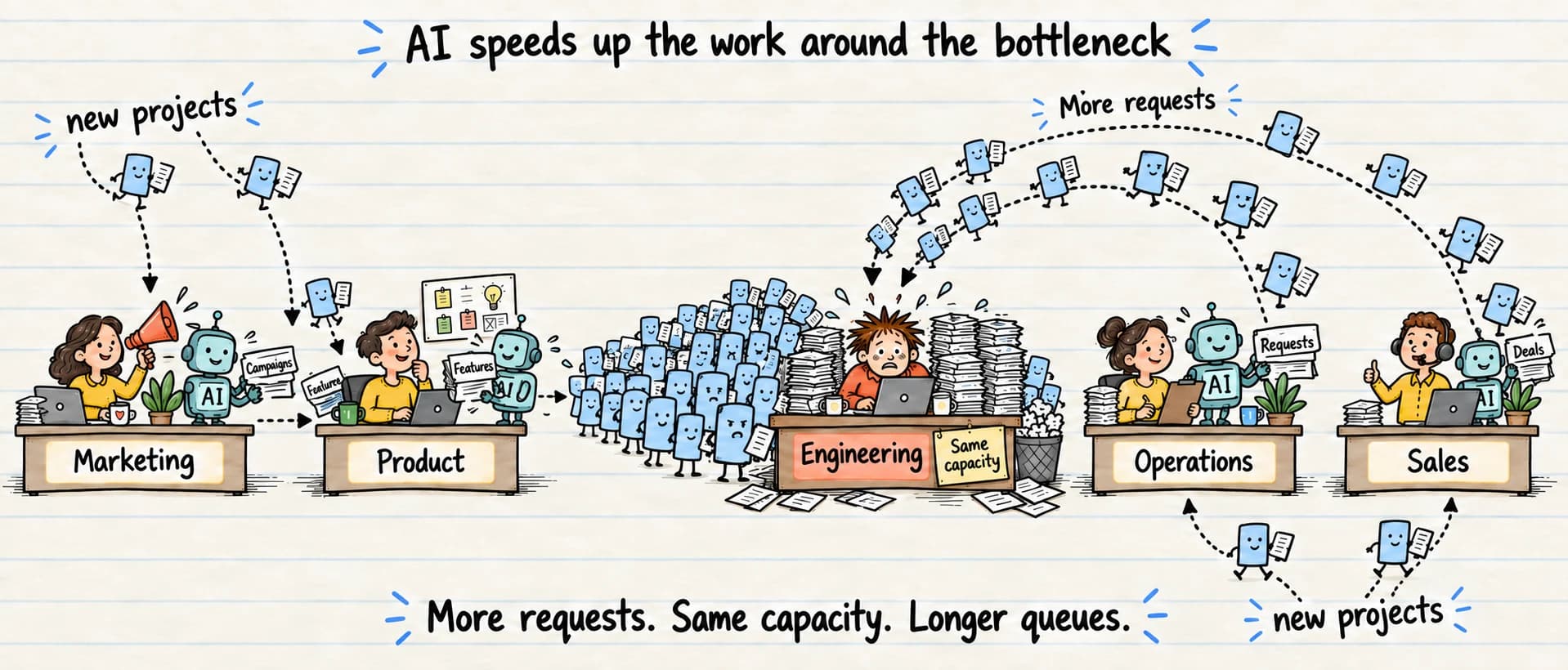 Read the full essayThe Theory of Constraints as Applied to AI Integration→
Work with me
Open to AI product work, consulting, and teaching.
I build AI products end to end and help teams integrate AI where it actually raises throughput. Based in Shanghai, working in English and Mandarin. Email dj@theory-a.com with a short description of the problem.
AI product discovery and prototyping
Taking an AI product idea from problem framing to a working prototype and first deployment. Full-stack ownership: architecture, implementation, evaluation, and release.
Designing and building internal AI tooling that relieves a real organizational bottleneck instead of flooding it. Informed by the Theory of Constraints.
Technical mentorship and organizational AI literacy
Hands-on sessions that help teams and individuals use AI agents and LLM tools with judgment: what to delegate, how to verify, where it breaks.
Practical one-on-one AI lessons for adults and parents near Zhongshan Park, Shanghai. Taught in English or Mandarin. No programming experience needed.
Founder · Mar 2020 – Present
Theory A
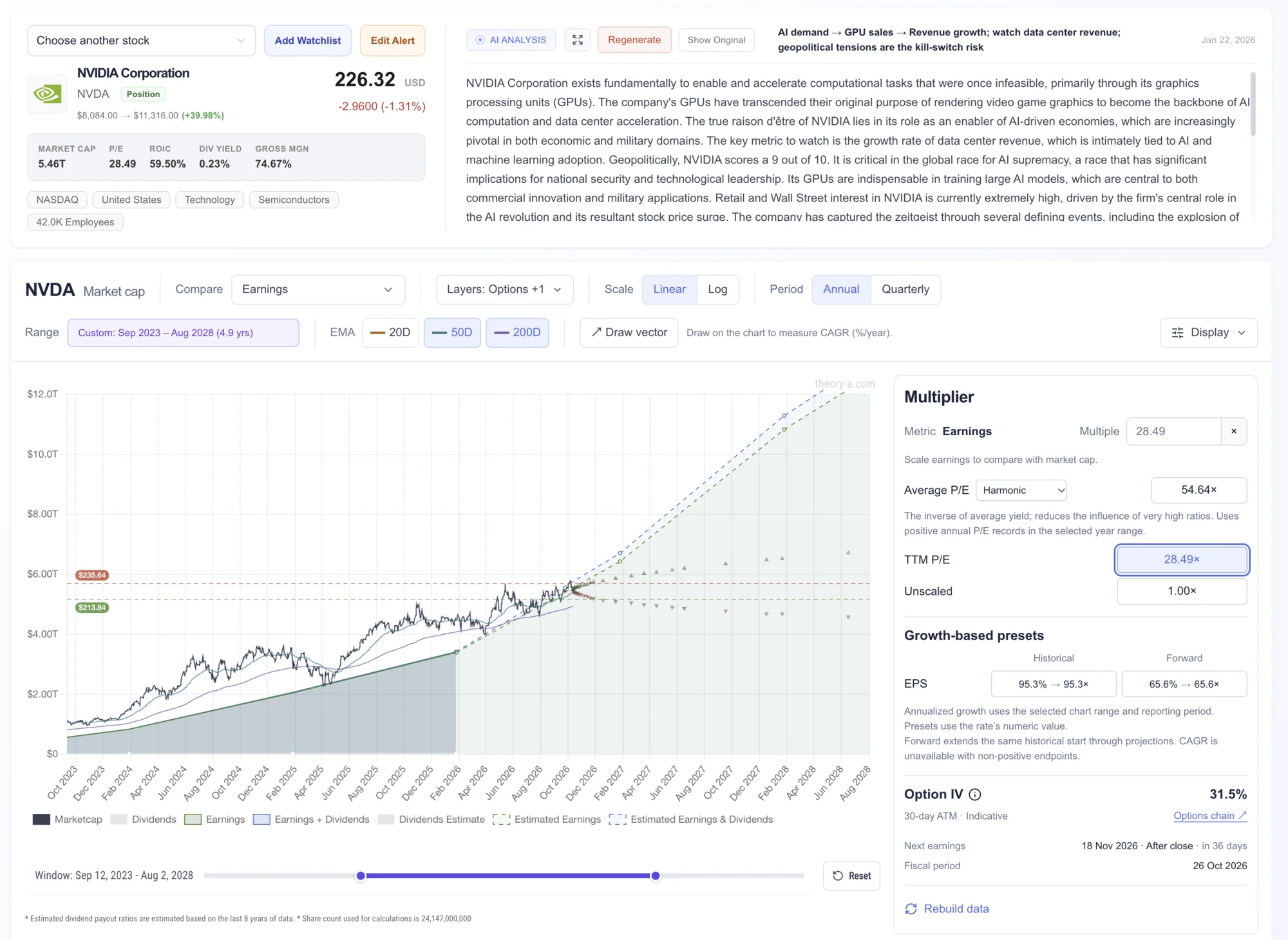
Fundamentals, valuation, and options in one platform.
I founded and built Theory A to make the relationship between business performance and market expectations visible.
I own the product from customer research through implementation and deployment: custom charts, statistical analysis jobs, database migrations, and data-provider integrations.
Explore Theory A ↗AI products & research tools
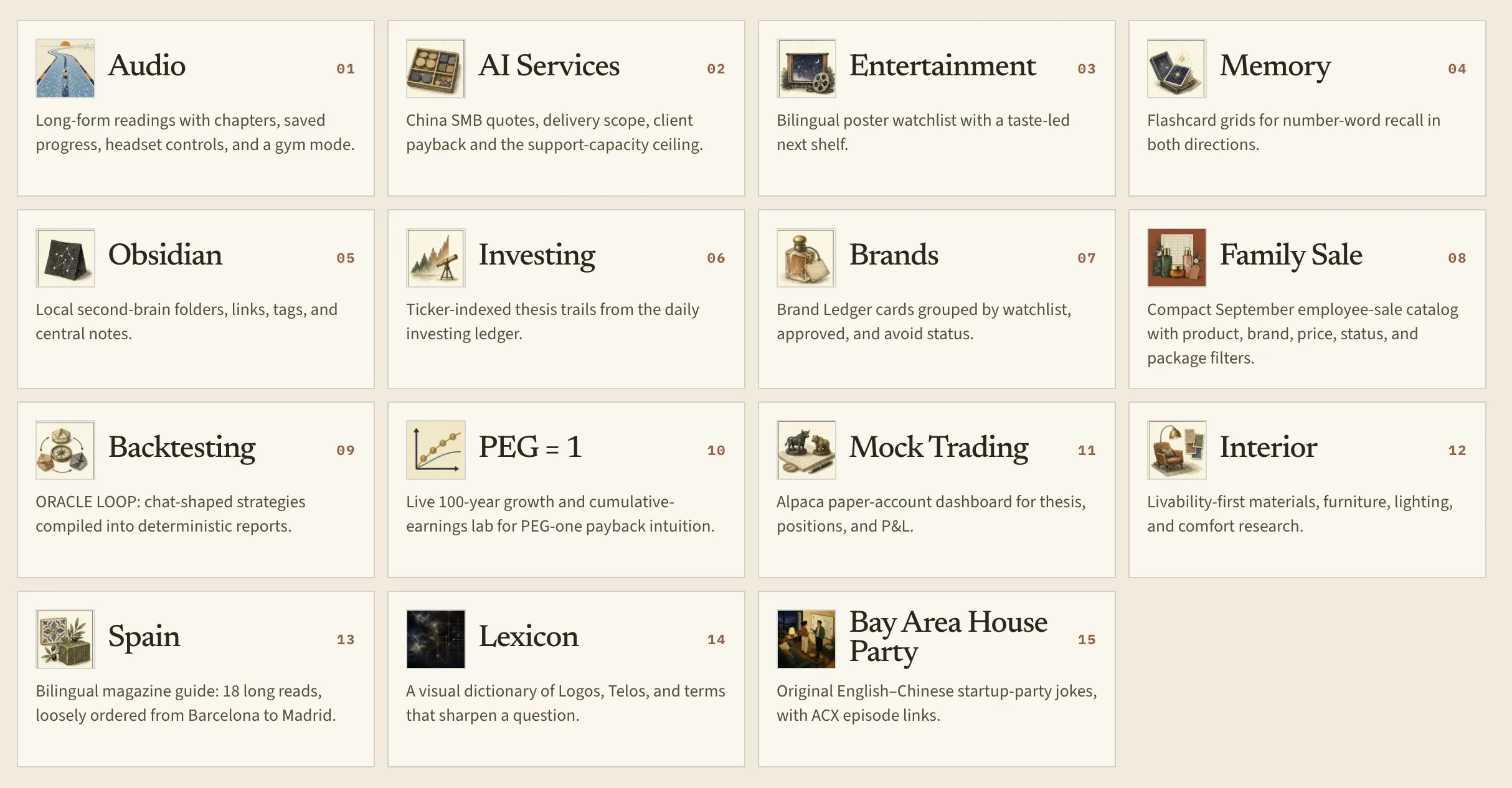
Agent workflows & memory
Hermes is a personal AI workspace for turning research and recurring tasks into reusable agent workflows. It carries context across sessions, records decisions, and packages useful methods as skills so agents can pick up work and improve over time.
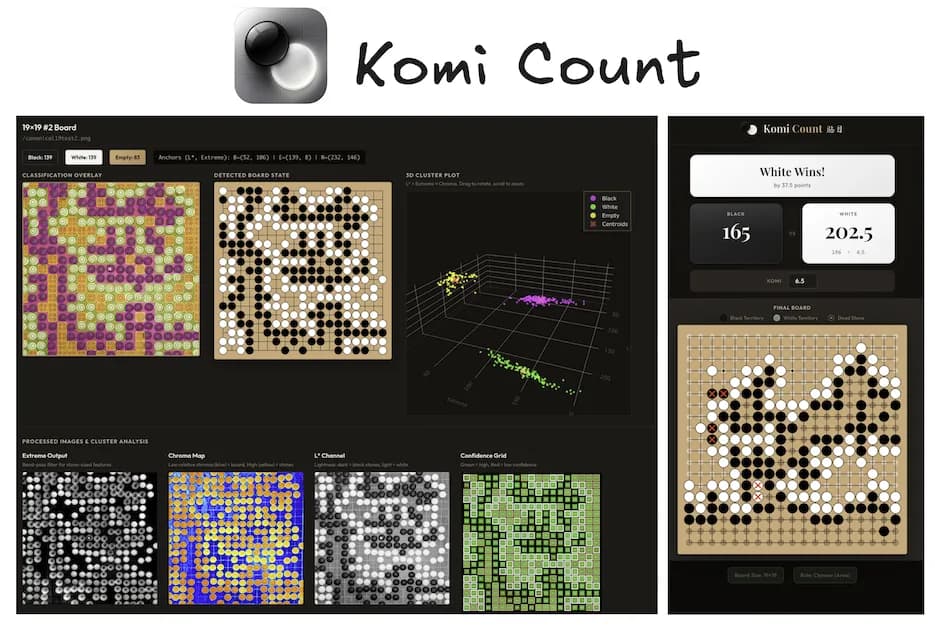
On-device computer vision
Scores Go boards from images using local computer vision and WebAssembly. Processing stays in the browser.
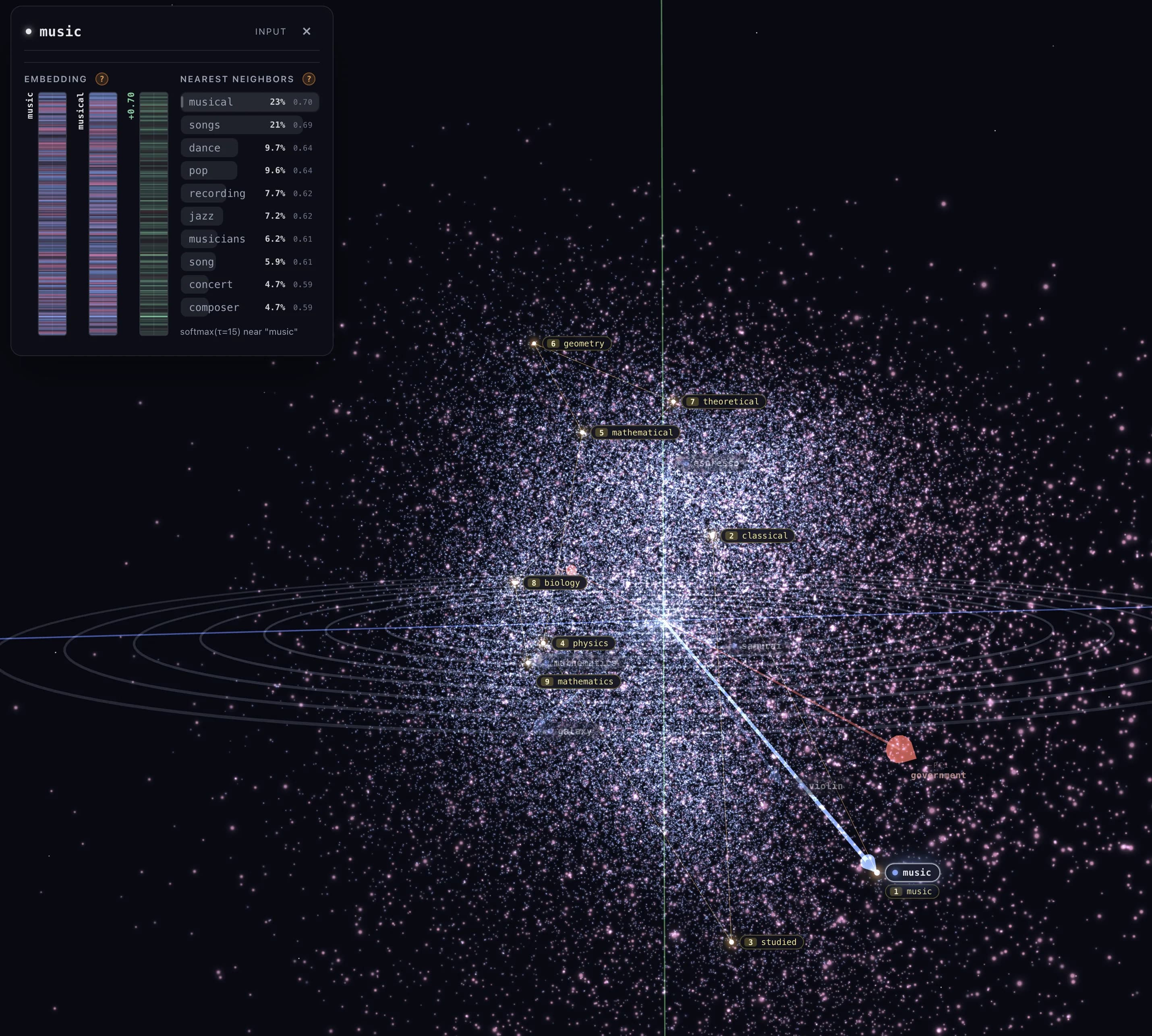
Embeddings & visualization
Built an interactive 3D explorer of GloVe word embeddings, turning semantic relationships between words into a visual interface.
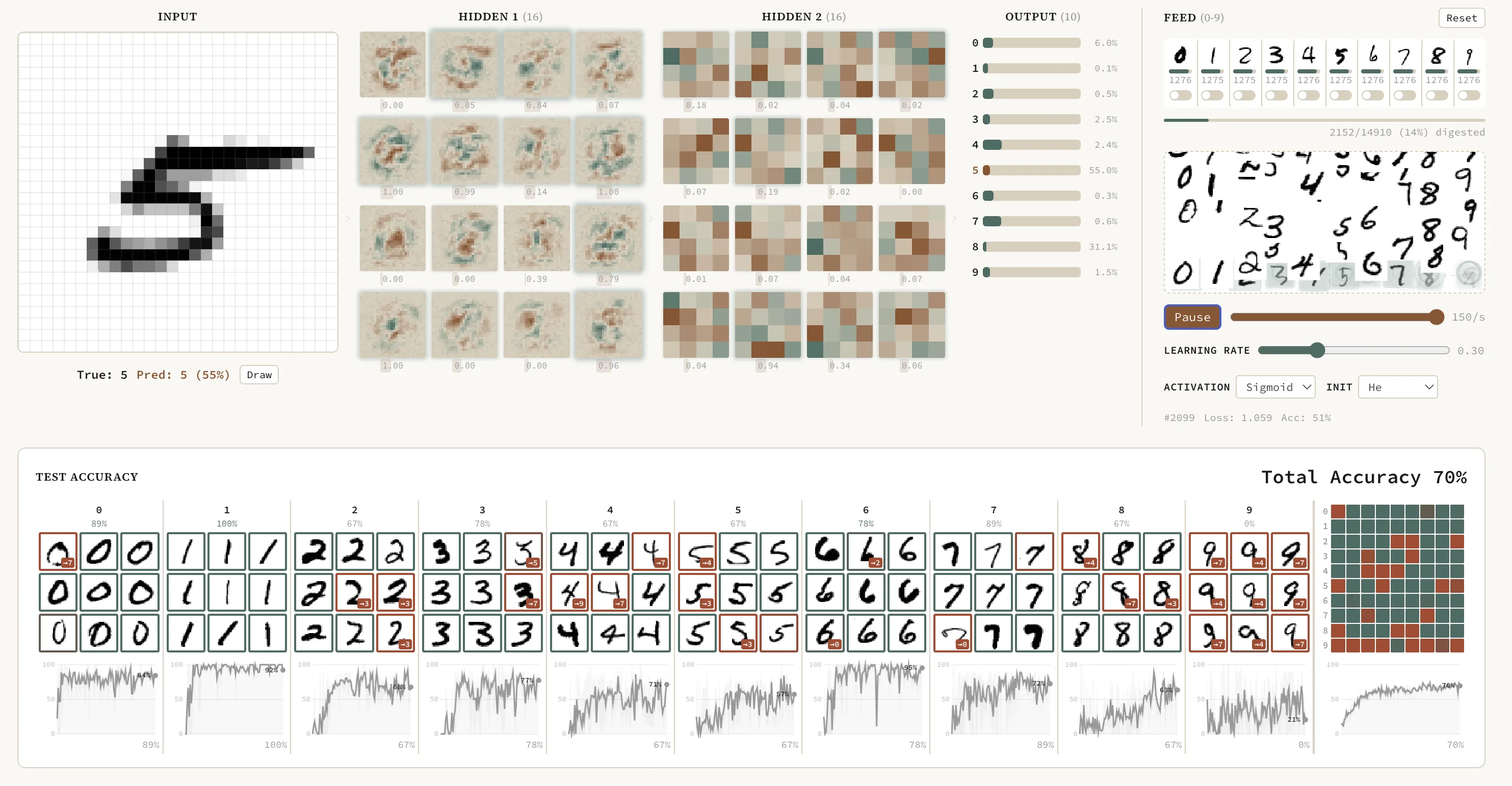
ML education
Built a visual explainer of MNIST neural-network training, making core ML concepts easier to inspect and communicate.
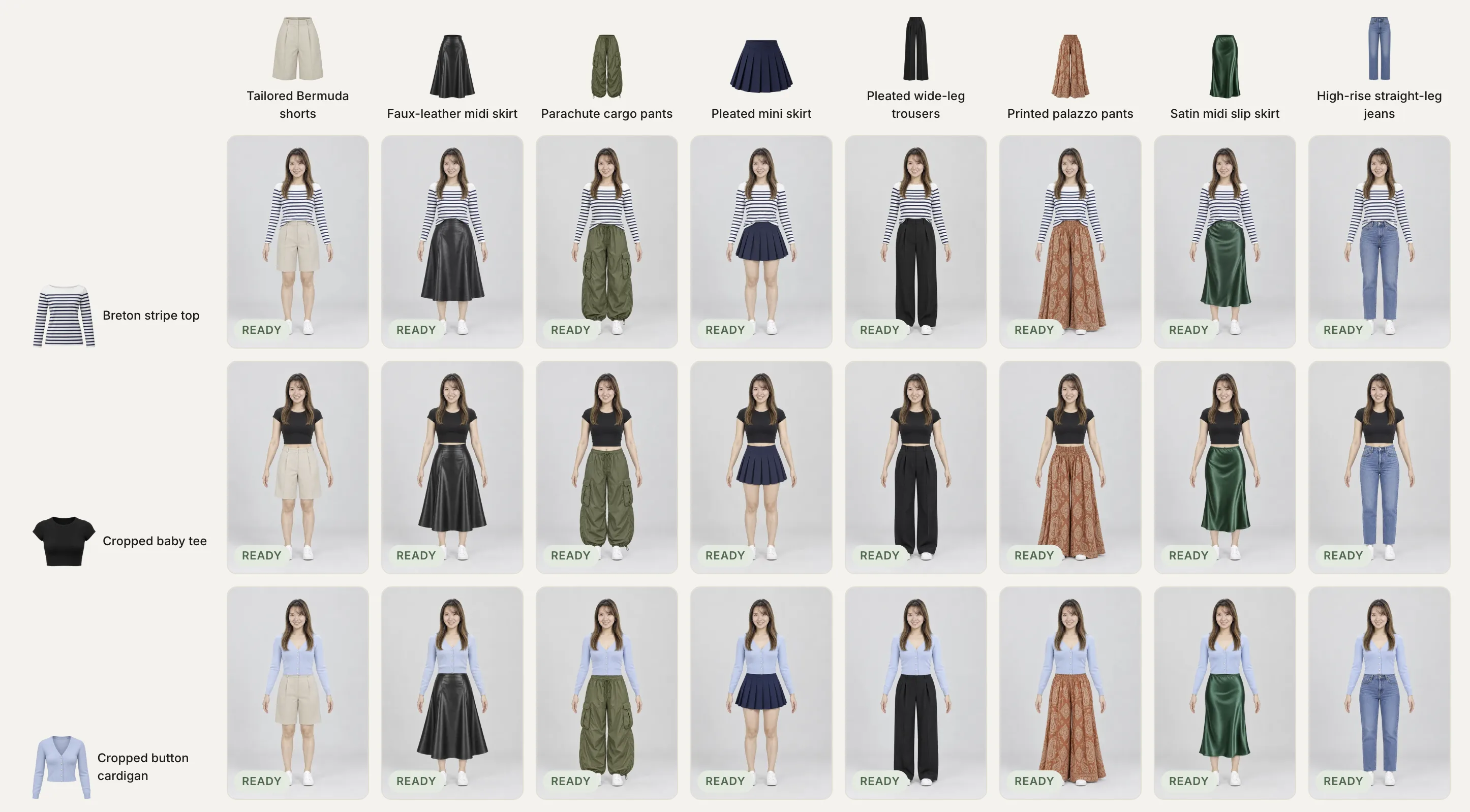
AI · Virtual try-on
Built an AI virtual try-on that renders the Cartesian product of tops and bottoms on one model, each cell its own generation job, so an n×m outfit space is scanned in a single grid.
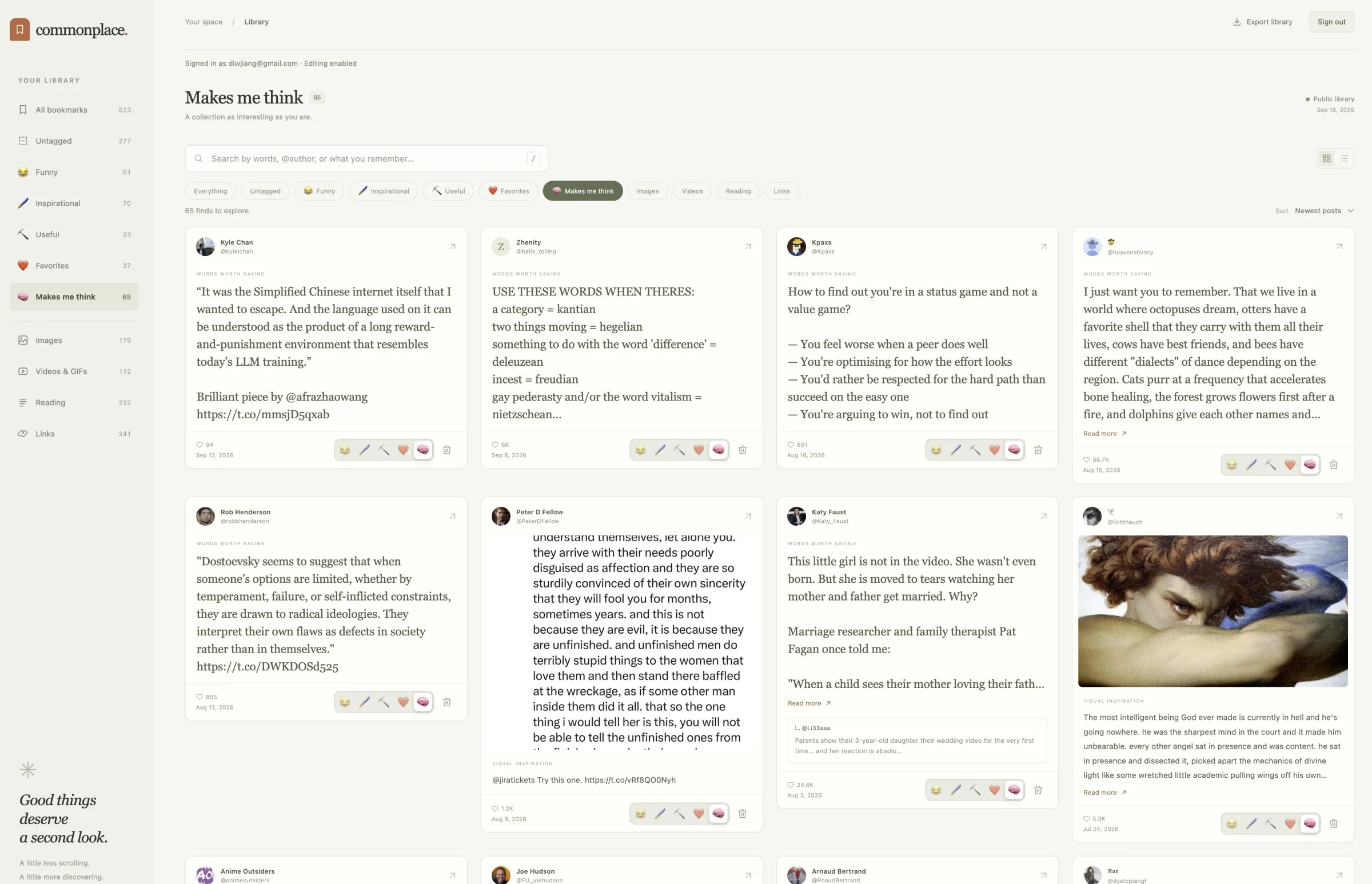
Personal · Bookmarks
Built a personal commonplace book: X bookmarks worth a second look, imported, tagged and searchable by words, author or what I remember of them.

Interactive experience · Search
A searchable collection of paper-cut memories using JEV to find the right feeling from a natural-language prompt, then drag and pin the keepsake that resonates.
Track record
Selected accomplishments
Theory A · solo founder and operator
- Built and run Theory A single-handedly since 2021: 2,200+ commits, a paid subscription tier live since 2022, and 18 scheduled production data pipelines.
- Serve a ~5,900-stock screening universe as a columnar bundle compressed from 4 MB to 1.5 MB, sized to stay cached at the CDN edge.
- Designed valuation averaging around harmonic means and zero-intercept least squares, so a single near-zero-earnings company can't distort a fair-value estimate.
- Built a pairs-research engine with market-adjusted partial correlation, rolling correlation regimes, and out-of-sample mean-reversion tests free of look-ahead bias.
- Derive 30-day at-the-money implied volatility from live option chains, filtering stale and wide quotes, and plot contracts at breakeven so the market's implied move becomes visible (NVDA example).
- Brought a five-year-old production codebase under ~900 automated tests and a supply-chain policy: install scripts disabled, two-week cooldown on new package versions.
Simulation and quantitative verification
- Specified a tennis strategy engine from the sports-science literature: RK4 ball flight with drag and Magnus lift, Coulomb-friction bounce, exact scoring recursions, and quasi-Monte Carlo match simulation.
- Verified the Swift implementation against an independent Python reference across 13 golden fixtures: landing within ±2 cm, event timing within ±2 ms, scoreboard within 1e-9.
- Made every number in the lesson text a live engine query; a build-time linter rejects any hand-typed figure.
- Built an LLM trading backtester with next-bar fills, fees, slippage, DST-correct market calendars, and a replay audit that re-derives every fill and metric exactly.
AI-directed film production
- Directed five finished music videos of 2 to 5½ minutes, rendered entirely in code from travel photo archives by up to eight parallel AI agents working to frame-exact handoff contracts.
- Cut beat-alignment error from 97 ms to 4 ms on AI-generated music with drifting tempo, and gate every render on ±2-frame audio/video sync measured from the encoded file.
- Achieved byte-identical, order-independent frame rendering in headless Chrome after tracing nondeterminism to GPU rasterization of large CJK glyphs.
- Aligned a classical Chinese recitation character by character, cross-checked it against a second aligner (mean offset 41 ms), and mastered it to −14 LUFS.
Governance for AI agents
- Built hash-locked human approval gates: paid generation refuses to run if any approved shot or keyframe has changed since sign-off.
- Enforced human authorship at the database layer, with Postgres triggers that block AI agents from overwriting human-edited drafts and translations that flag themselves stale when their source changes.
- Designed a lease-based job queue for external AI workers, with row-level locking, heartbeats, and per-claim tokens so a stalled worker can never publish late.
- Curated a bilingual world-history dataset of 4,700 events and 1,600 people with AI agents, held to an editorial spec by automated validators; questions are answered for under a cent each.
- Wrote style guides and linters that catch machine-sounding prose, applied across a 400-note digital garden.
Computer vision and learning science
- Built Komi Count, which scores Go games from a phone photo entirely on-device, iterating from Hough-line grids to Lab-chroma clustering to difference-of-Gaussians stone detection.
- Built Cadence, a typing tutor that models skill per letter transition, separates recognition time from motor time, and counts a transition as mastered only when it is both fast and stable.
- Ran within-person training experiments in Cadence with balanced assignment and Bonferroni-corrected bootstrap confidence intervals.
- Built an archery scorer that rectifies phone photos of targets with a hand-written homography before arrow detection.
Quick answers
Frequently asked
Who is David Jiang?
David Jiang is a software engineer and founder of Theory A LLC. He previously worked at Apple (lead UI developer on Siri's internal machine-learning data platform) and Google (UX developer on Google X drone operations software). He holds an M.S. in Computer Science from Cornell University and is a co-inventor on U.S. patent 10,700,950 (filed as Wei Jiang).
What does David Jiang work on?
AI products and research tools (Hermes agent workflows, Komi Count on-device computer vision, GloVe Galaxy, FashionGuide virtual try-on), financial visualization (Theory A, options chain visualization), and bilingual English/Chinese writing and philosophy projects (A Casual Dao De Jing, Meowmeow & Woofwoof, Harmonious Rites).
Is David Jiang available for consulting, contract, or collaboration work?
Yes. David is open to AI product discovery and prototyping, internal tools and workflow integration, technical mentorship, and organizational AI literacy work. Email dj@theory-a.com with a short description of the problem.
Does David Jiang offer AI lessons?
Yes. David gives in-person, practical AI lessons for adults and parents near Zhongshan Park in Shanghai, in English or Mandarin. No programming experience is needed. Details are at dj.theory-a.com/services?lang=en.
Where is David Jiang based and what languages does he work in?
David lives between Shanghai, China and San Mateo, California. He works in English and Mandarin Chinese and treats the gap between the two information ecosystems as a source of signal.
How do I contact David Jiang?
Email dj@theory-a.com. You can also find him on LinkedIn (david-jiang-74618251) and GitHub (dlwjiang). His writing lives at dj.theory-a.com/writing and his garden at garden.theory-a.com.
What is David Jiang's intellectual stance?
Across code and writing he tries to make hidden structure visible: in markets, in language, and in the self-deceptions organizations and people run on. Recurring concerns are self-deception, embodied emotion as suppressed intelligence, and structure over character. He works deliberately across Daoist, Confucian, Gestalt, somatic, and probabilistic frames, and has coined the frameworks Neural Annealing, Mask and Daemon, Weaponized Taste, Pattern Integrity, and Fluid Plurality.
AI product discovery and prototyping. Internal tools and workflow integration. Technical mentorship and organizational AI literacy.
dj@theory-a.com ↗