01
Why antifragility feels small为什么“反脆弱”显得有点局促

In June 2017, Venkatesh Rao published a short, unusually durable essay on Contraptions titled Gradatim Ferociter — borrowed from Blue Origin’s Latin motto, “step by step, ferociously.” On its surface, it is a sketch about rockets, bricks, and Nassim Taleb’s antifragility. Underneath, it is one of the clearest models we have for how ambitious things actually get built.
2017 年 6 月,Venkatesh Rao 在 Contraptions 上写过一篇篇幅不长、生命力却极强的文章,题为 Gradatim Ferociter——取自蓝色起源(Blue Origin)的拉丁文格言,意为“步步为营,猛烈推进”。表面上,它聊的是火箭、积木与塔勒布的“反脆弱”;往深处看,它给出了一套极清晰的模型,解释真正有野心的东西究竟是怎么建起来的。
This essay is a guided interpretation of Rao’s framework, paired with a live simulation of his four towers so you can watch the geometry play out in real time.
本文是对 Rao 这套框架的导读与诠释,并配有一组实时物理模拟,让你亲眼看见四种建造策略在同一条材料流下的生长与崩塌。
Rao starts with a quiet confession: although he likes Taleb’s concept of antifragility — systems that gain from disorder — he has always found the culture around it a little depressing. Applied with ideological fervor, antifragility starts to look like a doctrine for never sticking your neck out. It rewards mocking “fragilistas” from the sidelines, celebrates trivial safe increments, and quietly discourages radical leaps.
Rao 开篇就说了一个坦诚的感受:他很欣赏塔勒布提出的反脆弱(从混乱中获益的系统),却一直觉得围绕这个词的文化有些令人沮丧。一旦被当成意识形态来狂热奉行,反脆弱很容易滑向一种拒绝冒险的防守姿态——热衷于在场边嘲笑“脆弱派”,歌颂微不足道的安全增量,却在无形中扼杀真正激进的跃迁。
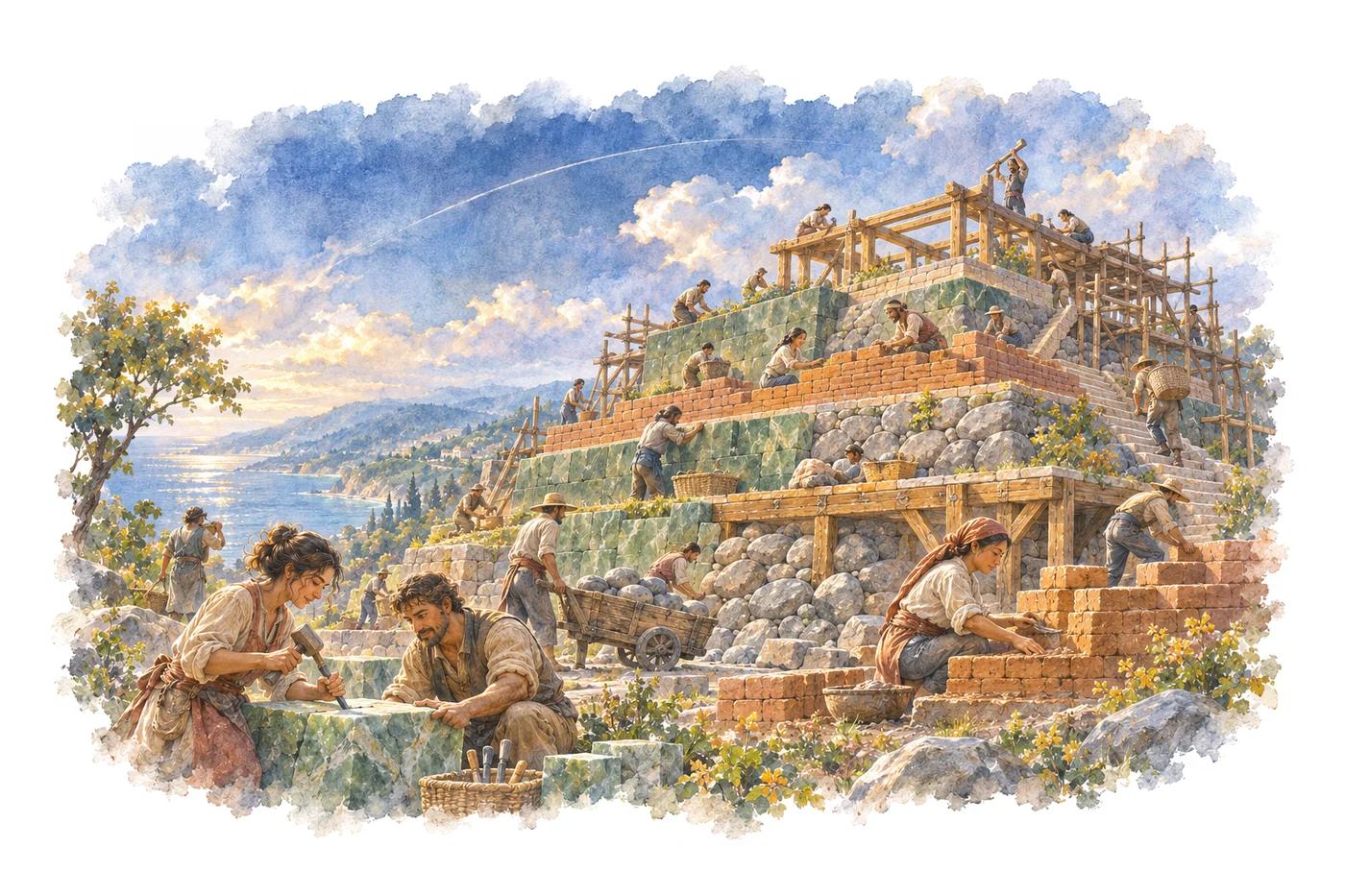
Babies are fragile, babies grow fast, and most of us would agree that babies are a good thing.婴儿是脆弱的,婴儿长得飞快;而我们大多数人都会同意,婴儿是一件好事。Growth and radical innovation do not eliminate fragility; they require fragility in proportion to how fast you want to move and how far you want to reach. Treating fragility as a moral sin confuses staying alive with building something worth living for. The real question is not how to make fragility zero, but how much fragility you should accept — and where to put it — given how ambitious you are and how well you actually know your materials.
成长与根本性的创新从来不是消除脆弱,而是必然伴随脆弱——你想走多快、跨多大一步,就需要承受与之成比例的脆弱。把脆弱当成道德原罪,是把“活下去”错当成了“建造值得活一遭的事物”。真正的问题不是如何把脆弱降为零,而是:在你的野心与认知边界下,你愿意承受多少脆弱,又该把它安放在结构的哪里。
02
Bricks and mystery stones彩色砖块与未知灰石
Two kinds of not knowing
两种截然不同的“不知道”
To escape the zero-sum posture of antifragility, Rao separates two ideas that people constantly blur together: fragility and knowledge risk.
为了跳出反脆弱式的零和防守,Rao 拆开了两个常被混为一谈的概念:脆弱性(fragility)与知识风险(knowledge risk)。
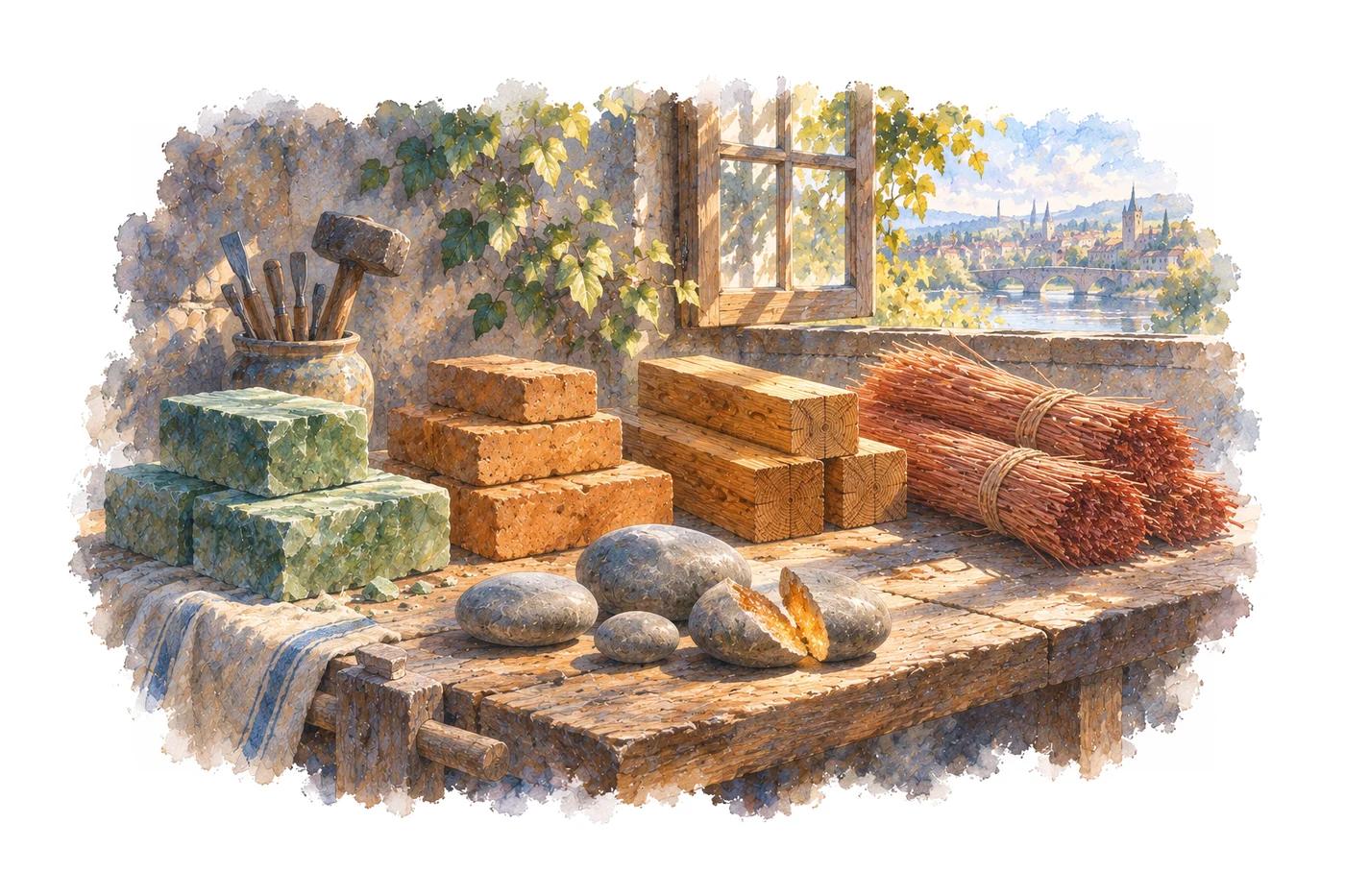
Fragility is the tested quality of something you already know. Think of grades in a calculus class. Both an A and a C are passing grades, but the A student does not merely know more facts; their understanding holds up under heavier weight and stranger angles. In Rao’s metaphor — borrowed from the Three Little Pigs — known ideas are rigid, well-shaped bricks whose structural strength you already know:
脆弱性衡量的是你已经知道的东西有多扎实。就像微积分课上的成绩:拿 A 和拿 C 都算及格,但拿 A 的学生不只是背得更多,他们的理解在更大压力与刁钻角度下更不容易散架。Rao 借用《三只小猪》的比喻,把已知的知识画成形状规整、强度明晰的彩色砖块:
- Grade A (green stone): deeply tested, load-bearing, hard to crush.
- Grade B (yellow clay): solid workhorse material, reliable under moderate load.
- Grade C (orange wood): useful filler, light and fast, but yields under serious weight.
- Grade D (red straw): flimsy and brittle; collapses as soon as you stack much on top of it.
- A 级(绿石): 历经充分检验,承重极强,难以压碎。
- B 级(黄陶): 扎实可靠的主力建材,能稳稳扛住中等荷载。
- C 级(橙木): 轻便快捷的填充料,一旦压重就会屈服。
- D 级(红草): 轻飘脆薄,头上稍微多叠几块便会溃散。
Every colored brick fits neatly. You know ahead of time what it can bear. Not every brick in a cathedral needs to be granite — only the ones carrying the arch.
每块彩色砖都严丝合缝,你事前就清楚它的承重极限。一座大教堂不必每一块砖都是花岗岩——真正必须用花岗岩的,是托起拱顶的承重线。
Knowledge risk is something else entirely. It is the uncertainty in fragility itself: guesses, hypotheses, ungraded experiments, new technologies, half-formed intuitions. Rao draws them as grey question-mark blobs. Their shapes are ambiguous and their true material is hidden. A grey stone might turn out to be Grade-A granite, or it might be Grade-D straw wearing a stone jacket. Until you put weight on it and test it — or crush it — you genuinely do not know.
知识风险则是另一回事。它指的是脆弱性本身的不确定性:猜想、假说、未经评分的实验、新技术与尚未定型的直觉。Rao 把它们画成带着问号的灰色团块。它们形状模糊,内在材质完全未知。一块灰石底下可能藏着 A 级花岗岩,也可能只是披着石头外衣的 D 级稻草。在真正往上面压重量、甚至把它压碎之前,你无从得知它的真面目。
Put fragility on the horizontal axis and knowledge risk on the vertical axis, and four distinct ways of building appear: Stagnation, Junk, House of Cards, and Gradatim Ferociter.
以脆弱性为横轴、知识风险为纵轴,便展开了四种截然不同的建造方式:停滞(Stagnation)、垃圾堆(Junk)、纸牌屋(House of Cards),以及猛烈而循序(Gradatim Ferociter)。
Fragility vs. Knowledge Risk脆弱性 × 知识风险象限
Select any quadrant to inspect how it mixes known bricks and mystery rocks.点击任意象限,查看它如何搭配已知砖块与未知灰石。
Grade-A stone along load-bearing spines; B/C fill and isolated ? rocks buffered by redundancy
承重主干用 A 级石块;B/C 级砖与被隔离的未知 ? 石块交错冗余
Small, local avalanches that reveal hidden ? grades without breaking the base
局部小滑坡:在压碎时揭开 ? 的真面目,却不伤底座
Starts deliberate (slow is smooth), then compounds into enduring height (smooth is fast)
起步克制(慢即是稳),随后把安全边际兑换为持久的加速度(稳即是快)
03
Four towers, one stream四座塔,同一条材料流
Four towers, one stream of bricks
四座塔,同一条积木流
Imagine that every builder receives the exact same steady stream of materials: a mix of graded bricks (`A`, `B`, `C`, `D`) and ungraded grey `?` rocks. Everyone starts on flat ground. Nobody can peek inside a grey rock before placing it; its true grade is only revealed if the weight above it crushes it.
设想四位建造者面前流过完全相同的材料传送带:既有标明等级的彩色砖(`A`、`B`、`C`、`D`),也有未知材质的灰色 `?` 石块。四人从同一片平地起步。谁也不能在落块前偷看灰石的内核;只有当上方重量把它压碎的那一刻,它的真实等级才会显露。
Watch what happens when all four strategies build side by side from the same stream.
看看当四种策略同时从同一条材料流中取块时,会发生什么。
Stagnation (gradatim timidis — step by step, timidly) refuses to touch a single grey `?` rock and discards anything below Grade-A green stone. Its tower is immaculate, symmetrical, and virtually indestructible. It also barely leaves the ground. Because the world moves at a minimum pace, waiting for perfect certainty is not merely slow — it is a guaranteed way to fall behind.
停滞(gradatim timidis——步步为营,畏缩不前)拒绝触碰任何一颗灰色 `?` 石块,也丢弃所有低于 A 级的砖。它垒出的塔整洁对称、几乎永不倒塌,但也几乎长不高。世界本身在以某个最低速度向前滚动,一味等待百分之百的确定性不只是慢——它几乎注定会被时代甩下。
Junk refuses knowledge risk — no mystery `?` rocks allowed — while abandoning quality standards. It grabs known C and D bricks and throws them together cheaply. This is the architecture of lemon markets and credential chasing: you already know what you built is shoddy, and you are quietly betting you can collect your payout and walk away before gravity collects its bill.
垃圾堆拒绝知识风险——一颗 `?` 灰石都不要——却同时放弃了质量底线。它随手抓起已知的 C、D 级次品砖草草往上叠。这就是柠檬市场和混文凭的建筑学:你早就知道自己造的是豆腐渣,心里赌的只是在重力来算账之前,自己已经套现离场。
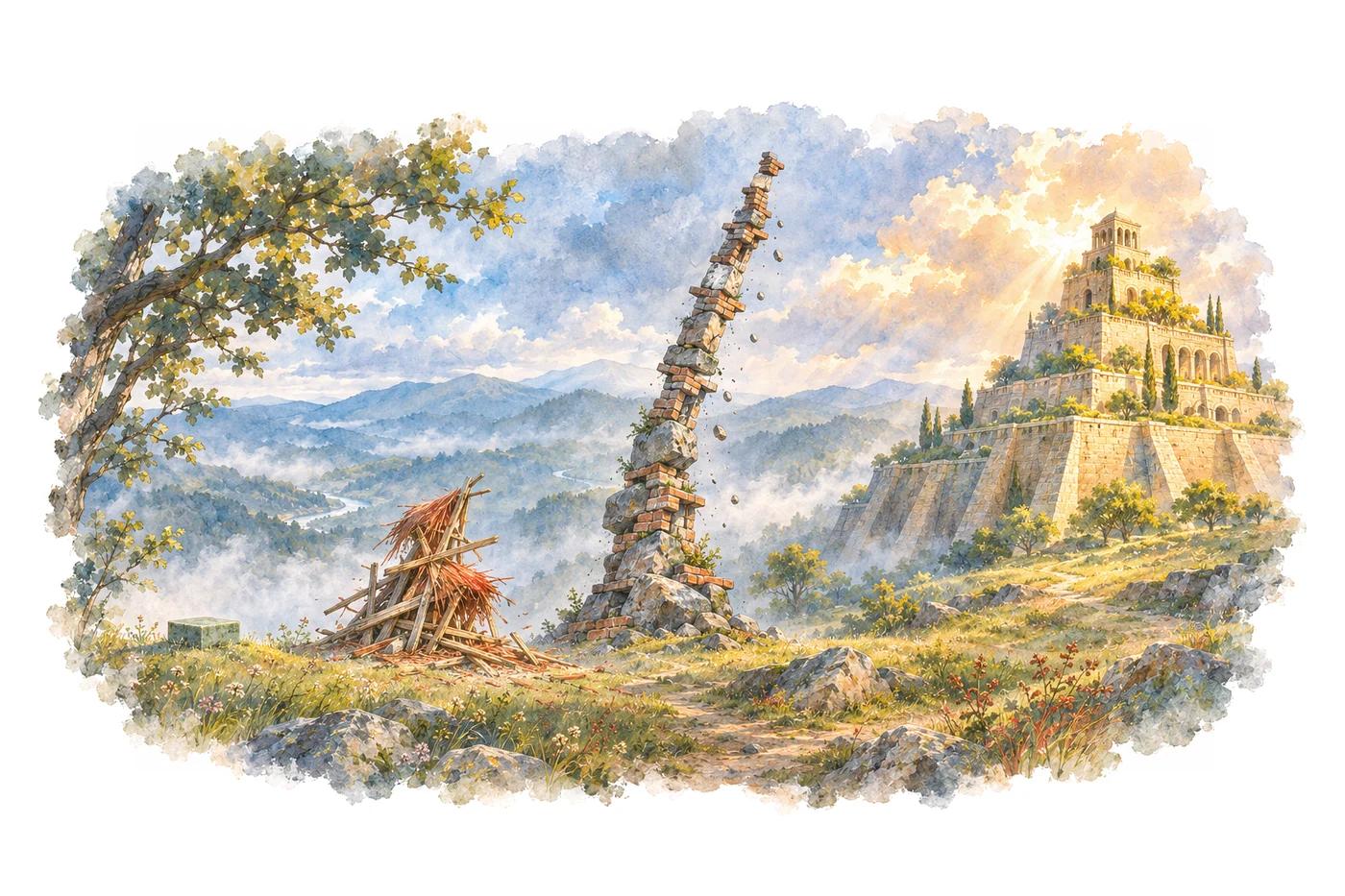
House of Cards is move fast and break things without a foundation. It grabs every brick and every grey `?` rock in whatever order they arrive and piles straight upward for maximum height. In the opening moments, it looks brilliant — dizzying spikes of early altitude, what Rao calls mind-candy. Then the accumulated weight or a passing gust crushes a buried `?` rock that turns out to be straw. Because the spire has no width and no redundancy, one failure drags the entire upper tower to the floor.
纸牌屋则是没有地基的“快速行动,打破陈规”。不管来的是好砖、草砖还是 `?` 灰石,它来者不拒,按到达顺序一股脑往最高处直摞。最初十几秒,它风光无限——令人眩晕的早期高度,Rao 称之为思维糖果(mind-candy)。可一旦自重累积或一阵侧风吹来,压碎了底层某块伪装成石头的 D 级草砖,狭长的尖塔既无底座又无冗余,一处失手便拖着整座高塔倾覆归零。
Gradatim Ferociter treats the tower as a risk portfolio. It refuses Grade-D straw, builds a wide running-bond pyramid, reserves Grade-A green stone for load-bearing spines, and interleaves grey `?` rocks carefully so no two untested boulders carry the whole structure together. Early on, it looks slower than House of Cards — slow is smooth. When a grey rock does get crushed and reveals itself as red straw or orange wood, the surrounding stone and clay bridge the gap: only a couple of local blocks tumble, the base holds, and the builder patches the pocket and keeps climbing.
猛烈而循序把整座塔当作一个风险投资组合来设计。它拒收已知的 D 级红草,铺开宽阔的错缝金字塔底座,把珍贵的 A 级绿石留给承重主干,同时有节制地穿插灰色 `?` 石块——绝不让两块未知巨石紧挨着扛起主梁。起初它看起来比纸牌屋慢,这就是慢即是稳。当某块灰石终于在荷载下被压碎、露出红草或橙木的真容时,周围的绿石与黄陶形成拱桥托住大局:只掉落局部一两块碎砖,底座纹丝不动,建造者补上缺口后继续攀升。
Four towers, side by side四座塔,并排生长
Watch each quadrant build with its own materials and pace: Stagnation waits for pure A stone, Junk piles cheap known bricks, House of Cards stacks everything upward fast, and Gradatim Ferociter interleaves A/B/C with buffered ? rocks. Grey rocks stay hidden until crushed — or toggle below to peek inside.看四种策略按各自的选材与节奏同时生长:停滞只等 A 级绿石,垃圾堆草草垒起已知次品砖,纸牌屋不挑材料直冲高度,猛烈而循序把 A/B/C 与缓冲过的 ? 灰石交错成塔。灰石默认在被压碎时才显露真容,也可随时点击开关透视内部。
Model info, probabilities & parameters模型规则、概率与可调参数? 50% · A 8% / B 47% / C 31% / D 14% · 10.5 blk/s
A 8.0% · B 47.0% · C 31.0% · D 14.0%
Same underlying grade distribution for known bricks and ? rocks; 50% arrive masked as ?.
- Stagnation: visible A only (0.42 blk/s)
- House of Cards: 1.0× (10.5 blk/s, all A/B/C/D/?)
- Gradatim F.: 1.0× (10.5 blk/s, same A & ?, swaps D→B/C)
- Junk: 1.5× (15.8 blk/s, B 14% / C 48% / D 38%)
- A Stone: mass 1.1 · cap ∞ (never crushes, compacts down)
- B Clay: mass 1 · cap 20.0 · arch < 13.5
- C Wood: mass 0.85 · cap 7.4
- D Straw: mass 0.7 · cap 2.4 · ? mass 1
04
Slow is smooth, smooth is fast慢即是稳,稳即是快

Where momentum — and “antifragility” — come from
势能——以及真正的“反脆弱”——从何而来
When you build something tiny, you have almost no design freedom. With one yellow brick and one grey rock, there are only three towers you can make. With dozens of graded bricks and dozens of grey rocks, there is a combinatorial explosion of configurations — and some of them are far sturdier than their individual parts.
当你只敢造极小的东西时,你几乎没有设计自由度。手里只有一块黄砖和一块灰石,你能摆出的塔总共也就三种。可一旦你拥有几十块不同等级的砖和几十块灰石,排列方式就会出现组合爆炸——其中某些精巧结构,整体上远比组成它的任何单个零件都更稳固。
That is where the word ferociter earns its keep. You add one step at a time, while reality occasionally subtracts `0` to `n` steps through avalanches and shocks. Ferociousness is not recklessness; it is the capacity to absorb a contained setback, learn what broke, and keep compounding net height.
这正是 ferociter(猛烈)一词的分量所在。你每次扎实迈出 `+1` 步,现实偶尔会用滑坡与冲击把你往回拉 `0` 到 `n` 步。猛烈不是鲁莽,而是能扛住可控的回撤、看清碎裂之处,并持续把净高度推上去的能力。
Notice that something very much like Taleb’s “antifragility” emerges naturally inside this model — without needing to treat fragility as an enemy. Suppose you design your tower so that avalanches should never cut more than eight bricks deep, yet in practice they never cut more than three. You have discovered an unexpected robustness margin. What you gained from uncertainty was not magical toughness, but information about how strong your structure really is. Now you can cash in that margin to build faster. That is Jeff Bezos’s line translated into mechanics: slow is smooth, and smooth is fast. You do not merely go fast; you accelerate robustly, because you know how hard you can fall and still stay on track.
值得注意的是,在这套模型里,某种非常接近塔勒布所谓“反脆弱”的现象会自然涌现——却不必把脆弱当成死敌。假设你原本设计这座塔时,预期滑坡最深可能塌掉八层砖,结果实战里每次滑坡最多只塌三层。你意外发现了一块稳健余量(robustness margin)。不确定性带给你的不是某种玄妙的变强体质,而是关于结构真实韧性的信息。现在你可以把这块余量兑换成更高的建造速度。这正是贝索斯那句话的力学翻译:慢即是稳,稳即是快(slow is smooth, smooth is fast)。你不是盲目求快,而是在清楚自己最坏会摔多深、且确信爬得起来的前提下,稳健地加速。
We pick up these four habits remarkably early — most visibly in school. The bottom-left student collects straight A’s inside the syllabus and stagnates the moment grading stops. The bottom-right coaster collects painless B’s and C’s for the diploma alone. The top-right dilettante chases thrilling half-baked schemes that peak in a weekend and scatter by Monday. The top-left builder is curiously indifferent to prestige: an A is worth earning where it bears structural load; elsewhere a B, a C, or an ungraded experiment will do.
这四种习惯,我们早在校园时代就已学会。左下角是紧盯考纲的全 A 学生,一旦脱离评分体系便迅速停滞;右下角是只求毕业证的滑水者,专挑好拿的 B、C 和轻松的 A;右上角是兴致勃勃的业余玩家,每逢周末都折腾出惊险的奇思妙想,周一便散落一地;唯有左上角的建造者,对分数背后的文化虚荣并不执念——只有在承重主干上,A 才值得拼命去拿,其余地方,B、C 或是一次没有分数的课外探索,就已经足够。
Rao ends his essay by pitching a game: give players a starter tower and a hundred incoming bricks and mystery rocks, and do not score the peak height they reach — run an aging simulation afterward, and score whatever is still standing. Tetris trains grade-A stagnation. Jenga trains houses of cards and towers of junk. Gradatim ferociter trains the instinct for Great Works.
Rao 在文末抛出了一个游戏构想:给玩家一座初始小塔和一百块陆续抵达的砖与灰石,最终得分不算途中达到过的最高点,而是在建完之后再跑一轮时间老化测试,最后依然耸立的高度才是成绩。俄罗斯方块训练的是全 A 停滞直觉,叠叠乐训练的是纸牌屋与垃圾堆直觉,而猛烈而循序训练的,是成就大工程的直觉。
And you do not need a rocket company to recognize it. Every time a baby pulls up against a chair, takes two wobbly steps, tumbles onto the rug, and reaches for the next step without losing nerve, you are watching step by step, ferociously in its purest form.
其实你根本不需要看火箭公司才懂这个道理。每当一个蹒跚学步的婴儿扶着椅背站起,晃晃悠悠迈出两步,跌坐在地毯上,随即毫无惧色地伸手迈向下一寸——你看到的,就是最纯粹的步步为营,猛烈推进。
Scroll across to compare all four regimes横向滑动对比四种策略
| Dimension维度 | High knowledge risk · Low fragility高知识风险 · 低脆弱性Gradatim Ferociter猛烈而循序 | High knowledge risk · High fragility高知识风险 · 高脆弱性House of Cards纸牌屋 | Low knowledge risk · Low fragility低知识风险 · 低脆弱性Stagnation停滞 | Low knowledge risk · High fragility低知识风险 · 高脆弱性Junk垃圾堆 |
|---|---|---|---|---|
| Operating rule行动准则 | Step by step, ferociously — bound the fall, then accelerate步步为营,猛烈推进——框住跌落,再提速 | Move fast and pile everything upward immediately全速冲高,来者不拒地往上堆 | Gradatim timidis — never place anything that could fail畏缩而循序——绝不放下任何可能出错的砖 | Zero mystery, low standards — build shoddy and exit early零未知、低标准——明知粗制滥造,赌的是自己早早脱身 |
| Materials材料组合 | Grade-A stone along load-bearing spines; B/C fill and isolated ? rocks buffered by redundancy承重主干用 A 级石块;B/C 级砖与被隔离的未知 ? 石块交错冗余 | Every brick and ? rock stacked straight up in whatever order it arrives无论 A/B/C/D 还是 ? 石块,拿到什么就往塔顶叠什么 | Only certified Grade-A green stone; rejects all mystery ? rocks and lower grades只收经过认证的 A 级绿石,拒绝一切 ? 未知石块与次级砖 | No ? rocks at all, just cheap known C/D bricks thrown together loosely从不碰 ? 石块,只用已知的廉价 C/D 砖草草垒砌 |
| Failure mode失败形态 | Small, local avalanches that reveal hidden ? grades without breaking the base局部小滑坡:在压碎时揭开 ? 的真面目,却不伤底座 | Catastrophic full-tower collapses when a buried ? or D brick gives way灾难性整塔崩塌:底层一个被压碎的 ? 或 D 砖就能带走全部高度 | Almost none — pays a steep speed tax to prevent even tiny chips几乎零坍塌——为杜绝任何微小滑坡付出高昂的时间代价 | Predictable buckling and crumbling once weight or time catches up可预见的溃散与掉渣——重量和时间一到便原形毕露 |
| School archetype校园原型 | Curious builder who earns A’s where they bear weight and explores ungraded frontiers有策略的学习者:只在承重处拿 A,同时大胆探索课外未知领域 | Excited dilettante chasing madcap schemes and sugar-high insights兴致勃勃的业余爱好者,热衷奇思妙想,沉迷短暂的灵光高潮 | Straight-A student with no curiosity outside the syllabus只追全 A 的好学生,对考纲之外的世界毫无好奇 | Credential coaster hunting easy B’s, C’s, and painless A’s混文凭的滑水者,只挑轻松的课与现成的学分 |
| Game instinct游戏直觉 | A tower-building & aging game that trains Great Works instincts兼顾建造与时间老化测试的“大工程”直觉 | Jenga — exhilarating precarious spikes followed by a crash叠叠乐(Jenga)——令人兴奋的惊险拔高与随之而来的倾覆 | Tetris — clean, tidy lines with zero ambiguity俄罗斯方块——整洁、安全、毫无未知 | Jenga built from known lemons明知是次品却照样硬叠的叠叠乐 |
| Long-run result长期结果 | Starts deliberate (slow is smooth), then compounds into enduring height (smooth is fast)起步克制(慢即是稳),随后把安全边际兑换为持久的加速度(稳即是快) | Wins the first ten seconds, then oscillates in a jagged sawtooth赢在头十秒,随后在剧烈锯齿中反复归零 | Rock-solid and painfully short; overtaken by a world that keeps moving坚如磐石却矮得可怜,最终被不断前行的世界甩在身后 | No surprises, no discovery, and a brittle low ceiling既无惊喜,也无探索,停在脆弱而低矮的上限 |
Adapted from改编自 Venkatesh Rao · Gradatim Ferociter