谁来提示提示词
Who Will Prompt
the Prompts?
The grind has been automated.
Nobody told the grinders.
苦活已经被机器接手了,
还没人告诉吃苦的人。

In Shanghai, a family sells its apartment to pay for an only child's computer science degree abroad. The same year, the models learn to code.
在上海,一个家庭卖掉房子,供独生子女出国读计算机。同一年,模型学会了写代码。
Nobody in that family thinks of themselves as a gambler. Yet they have just pushed every chip they own onto a single hand. Why does a move like that feel like love and duty rather than risk? Why can't working harder rescue it? And what would the alternative look like?
这个家庭里,没有人觉得自己是赌徒。可他们刚刚把手里所有的筹码,推上了同一手牌。为什么这样一步,感觉像爱和责任,而不像风险?为什么更拼命也救不了它?另一条路又是什么样子?
Underneath sits a bigger question. Machines took the grind first, then the code, and now they write prompts for each other. Someone still sits at the top of that stack, deciding what all of it is for. Who will prompt the prompts?
底下还有一个更大的问题。机器先接手了苦活,然后是代码,现在它们开始互相写提示词。可总有人坐在这一摞的最顶上,决定这一切是为了什么。谁来提示提示词?
Numbers with a dashed gold underline can be dragged, and every diagram responds to touch.
带金色虚线的数字可以拖动,每一张图都可以用手指或鼠标操作。

You're already all in.
你早就梭哈了。
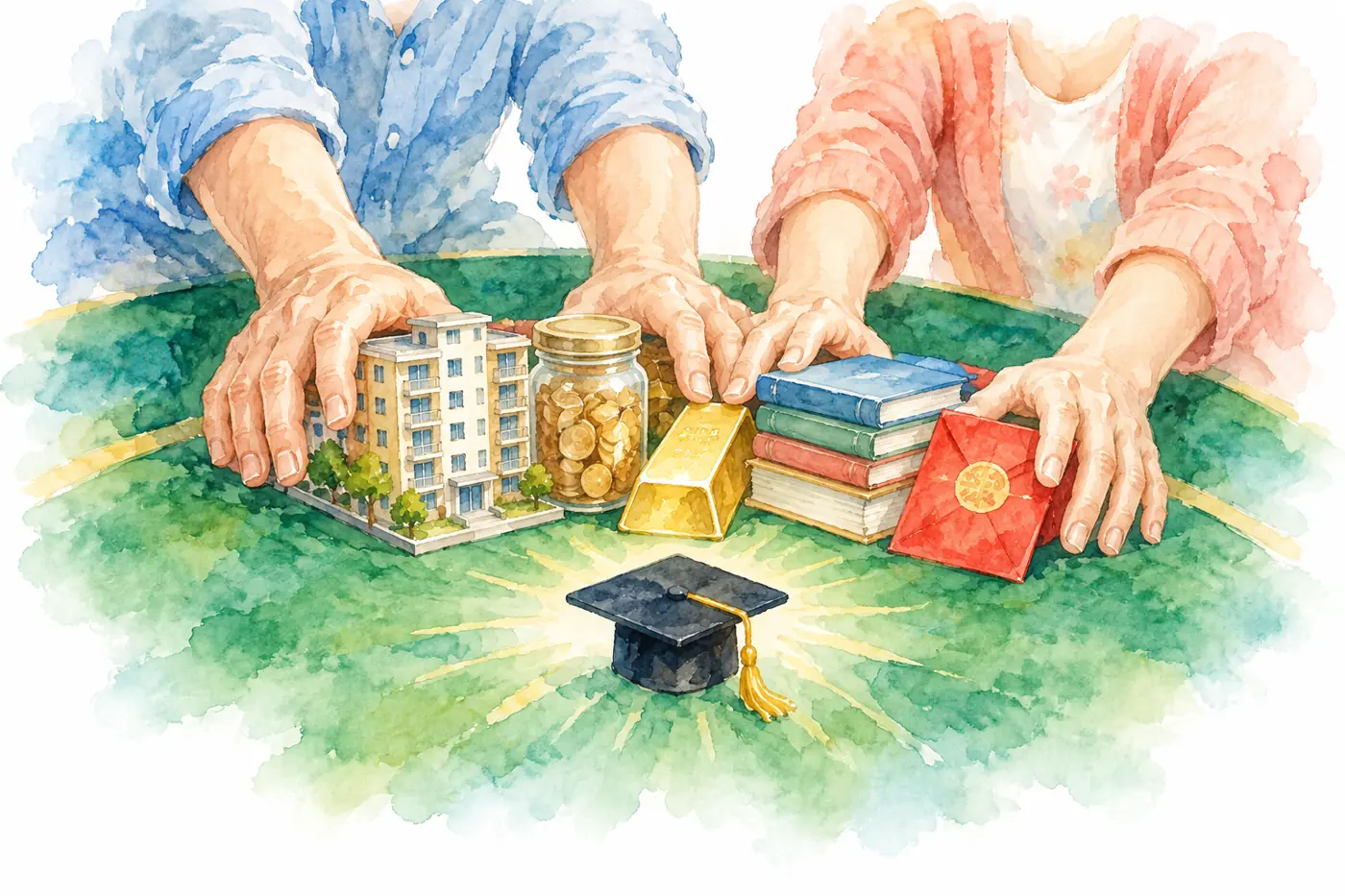
Anyone who has played poker knows what “all in” means: every chip you own, pushed onto one hand. Most people grasp why that's dangerous. Few would put their entire savings into a single stock.
打过牌的人都知道“梭哈”是什么意思:把手上所有的筹码,押在同一手牌上。大多数人都明白这有多危险,很少有人会把全部积蓄买成一只股票。
Yet families go all in on their children again and again. A household sells its only apartment to fund one degree abroad: one child, one major, one country, with the payoff a decade away and no way to spread the risk. Some of these bets are forced. Nobody chooses the gaokao; it is the only table in the room. Others are chosen: the school-district apartment bought at the top of the market, the tutoring that eats half a salary, the foreign degree picked because the relatives can read its price tag.
可是在孩子身上,家庭一次又一次地梭哈。一户人家卖掉唯一的房子,去供一张洋文凭:一个孩子、一个专业、一个国家,回报在十年之后,风险无处分散。有些押注是被迫的:没人能选择高考,那是屋里唯一的牌桌。另一些是自己选的:在高点买下的学区房,吃掉半份工资的补习班,因为亲戚看得懂价签才选的洋文凭。
That's why so many people live with a low, constant hum of stress. Whether they like it or not, they are investors, and their portfolio is made of the things they love. Cash is a bet on a currency. An apartment is a bet on a story, as many Chinese families have learned. Even refusing to choose is a choice. There is no square on the board that isn't a bet.
这就是为什么那么多人身上总有一种低沉而持续的焦虑。不管愿不愿意,他们都是投资者,而他们的投资组合,是由他们所爱的东西组成的。现金押的是货币,房子押的是故事,很多中国家庭已经体会到了。连不做选择也是一种选择。棋盘上没有哪一格不是下注。
Capital is stored time. Every cathedral was paid for by someone who didn't eat all the grain. A degree, a skill, an audience, your health, the trust people place in you: each is stored time, and each comes with a horizon, an exit or no exit, and a crowd of other people buying the same thing. So before you put money, years or love into anything, ask three questions.
资本是储存的时间。每一座大教堂,都是某个没把粮食吃光的人付的钱。一张文凭、一门手艺、一群听众、你的健康、别人对你的信任:每一样都是储存的时间,都有它的期限、有没有退路,以及一群同时在买的人。所以,在把钱、岁月或爱投进任何东西之前,先问三个问题。
- How long until it pays?多久才能回本?Months, like a movie, or decades, like a degree? · 像电影那样几个月,还是像文凭那样几十年?
- Can I get out?我能退出吗?What happens if I'm wrong halfway? · 做到一半发现错了,会怎样?
- Who else is buying right now?现在还有谁在买?If everyone is, the price assumes it works. · 人人都在买,价格里已经假设它一定成功。
We used to sort work into jobs above the API, which tell software what to do, and jobs below it. AI moves the line up to the prompt: whoever holds the right to ask is safe, and everything below gets commoditized. It moves once more, and that answers the question in the title. Who will prompt the prompts? Whoever owns the capital. Above the capital are the people who decide where stored time goes: the money, the compute, the years. Below it are the people who get allocated. A family that sells its only home for one degree has, without meaning to, volunteered to stand below it.
我们曾把工作分成 API 之上(告诉软件做什么)和 API 之下。AI 把这条线推到了 prompt:谁握有提问的权利,谁就安全;prompt 之下的一切都会被商品化。它还会再移动一次,而这正好回答了标题里的问题。谁来提示提示词?拥有资本的人。资本之上,是决定储存的时间流向哪里的人:钱、算力、岁月;资本之下,是被配置的人。一个卖掉唯一住房去换一张文凭的家庭,在不知不觉中,自愿站到了这条线下面。
Who will prompt the prompts?谁来提示提示词?
Everything you hold is capital. You are not. You are the allocator.
你拥有的一切都是资本
但你不是
你是配置者

Working harder loses twice.
更拼命,会输两次。
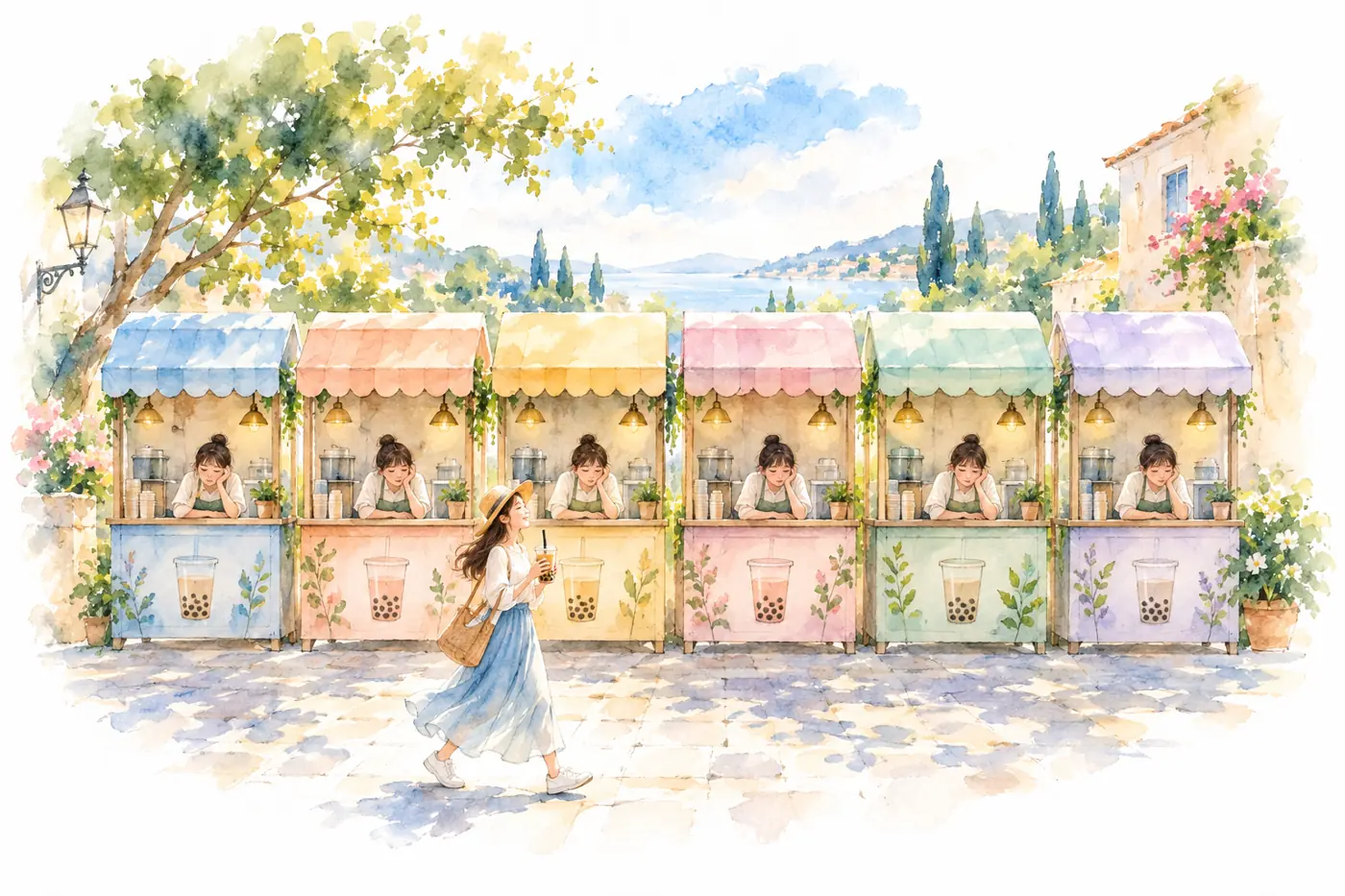
When a bet like that starts to go wrong, the instinct is to double down. The graduate who can't find a job enrolls in a second master's. The parent with a little savings left opens a bubble tea shop, because bubble tea is hot. Both moves lose, for two different reasons.
当这样一注开始出问题,本能是加码。找不到工作的毕业生,再读一个硕士。手里还剩点积蓄的父母,开一家奶茶店,因为奶茶正火。这两步都会输,原因各不相同。
First loss: the frontier is the new risk-free rate.
第一次输:前沿模型的进步,就是新的无风险利率。
In finance, every investment has to beat the risk-free rate: the return you could earn by doing nothing, safely, such as lending to the government. Something new has happened to that rate. a16z estimated that the price of a given level of model capability has been falling about tenfold a year. Money sitting still is getting smarter: $100 spent on thinking from now buys roughly what buys today. Anything built from cognitive work, a skill, a degree, a piece of software, now has to outrun that curve.
在金融里,任何投资都要跑赢无风险利率:什么都不做、安安稳稳就能拿到的回报,比如把钱借给国家。这条利率出现了新变化。a16z 估算,同等能力的模型,价格大约每年降到十分之一。放着不动的钱,正在变聪明:后花在思考上的 $100,大约能买到今天 的量。任何用认知劳动做成的东西,一门手艺、一张文凭、一个软件,现在都得跑赢这条曲线。
The price of going early提前的代价
Drag the marker · 拖动标记Assumes the cost of a fixed level of capability keeps falling at the chosen pace. Past trends aren't promises, so you can pick a slower one. · 假设同等能力的成本按所选速度继续下降。过去的趋势不是承诺,所以你可以选更慢的速度。
Spend $100,000 this year hand-building what next year's model does for $100, and you weren't investing. You were racing the labs with your own money. Even the people funding AI see it: Yishan Wong, Reddit's former CEO, wrote that "every AI application startup is likely to be crushed by rapid expansion of the foundational model providers."
今年花 $100,000 手工打造明年模型 $100 就能做的东西,你不是在投资,而是在用自己的钱和实验室赛跑。连给 AI 投钱的人也看到了:Reddit 前 CEO Yishan Wong 写道,「每一家 AI 应用创业公司,都很可能被基础模型提供商的快速扩张碾压」(原文为英文)。
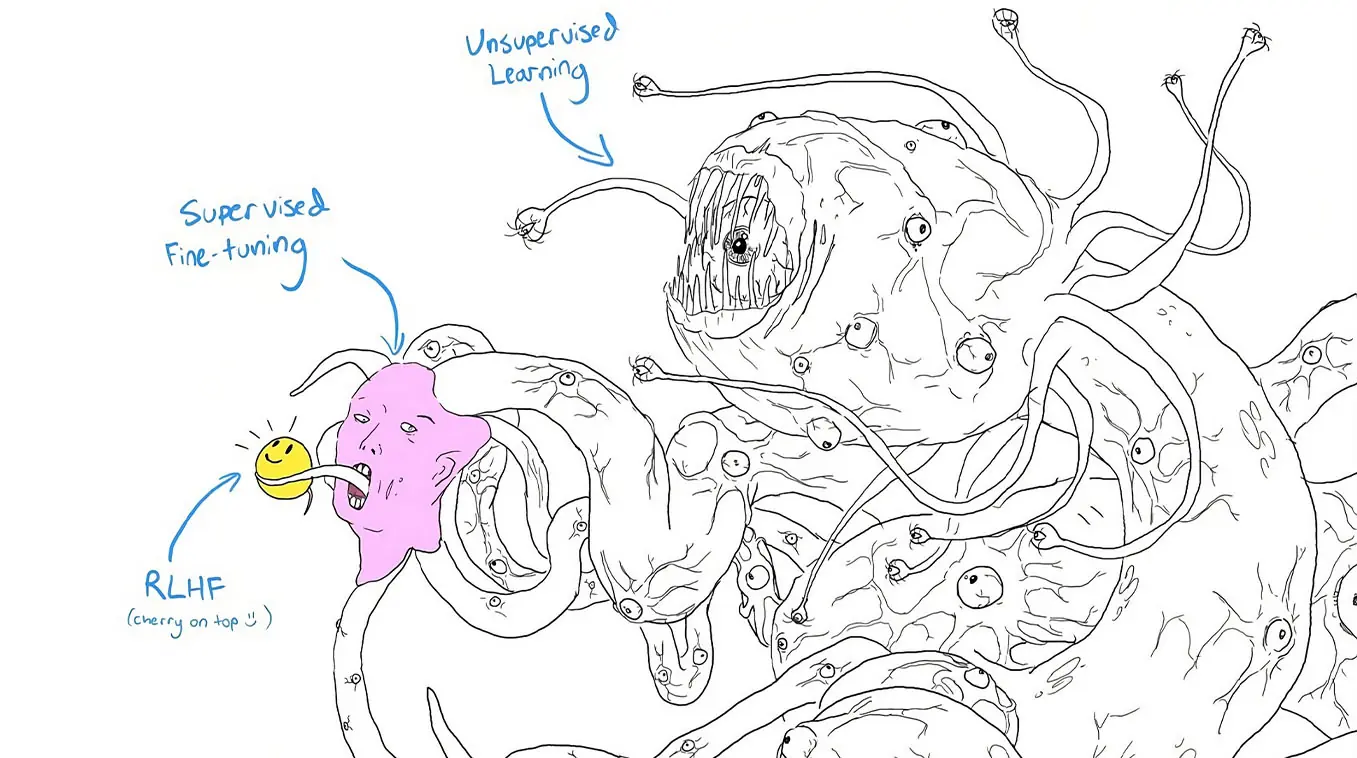
This is what your second master's is competing with. The smiley face costs $20 a month. The thing behind it gets cheaper every quarter and never sleeps.
你的第二个硕士学位,竞争对手就是它。那张笑脸每月 20 美元,笑脸背后的东西每个季度都在变便宜,而且从不睡觉。
The Shoggoth, after TetraspaceWest (2022). · 修格斯,原图作者 TetraspaceWest。
Second loss: if your margin is below your interest rate, your hard work is a hobby.
第二次输:利润率低于贷款利率时,再拼命也只是一门爱好。
Picture a street with one successful bubble tea shop. Ten people write business plans for the same street, and every plan looks great, because each is modeled on that first shop. They all get loans and they all open at once, and then the part none of the plans modeled arrives: each other. Ten shops bid for the same storefronts, suppliers and part-time workers, and split the same customers ten ways. Build the street yourself:
想象一条街上有一家生意很好的奶茶店。十个人为同一条街写了商业计划书,每一份都很漂亮,因为都是照着那第一家店做的。它们都拿到了贷款,同时开业,然后所有计划书都没算进去的那部分来了:彼此。十家店抢同样的铺面、供应商和兼职员工,把同一批顾客分成十份。自己来搭这条街:
Open another shop on the street在这条街上再开一家
Illustrative numbers, real mechanics · 数字为示意,机制是真的Each storefront shows its monthly profit; the queue shows its share of the street's customers. Watch the owners. · 每个店面上方是月利润,门前的队伍是它分到的顾客。留意店主的样子。
Model: each shop borrows ¥500,000 at 6%. Street demand is 500 cups a day plus 60 per shop, but every new shop bids up rent (+7%), ingredients (+2%) and wages (+4%). Cups sell for ¥14. The owner's fourteen-hour days are unpaid. · 模型:每家店以 6% 借 ¥500,000。整条街每天 500 杯,每多一家店多 60 杯,但每家新店推高房租(+7%)、原料(+2%)和工资(+4%)。每杯 ¥14。店主每天十四小时的劳动不计报酬。
Past the dashed line, an owner can work fourteen-hour days, seven days a week, and still be destroying money. Every hour returns less than the capital tied up in the shop costs. Scott Alexander called this kind of race to the bottom Moloch: the god who demands that everyone sacrifice a little more just to stay in place. In Chinese, Moloch has a shorter name. 内卷.
过了那条虚线,店主就算每天干十四个小时、一周七天,也是在毁掉钱。每一个小时的回报,都低于压在店里的资本的成本。Scott Alexander 把这种逐底竞争叫做 Moloch(摩洛神):一个要求所有人多牺牲一点、才能留在原地的神。在中文里,它的名字更短:内卷。
Idle money is getting smarter. Crowded effort is getting cheaper.
闲钱在变聪明
扎堆的努力在变便宜
Bitterness is a cost, not a currency.
苦是成本,不是货币。
Here's the strange part. The owner can read those numbers. She keeps the shop open anyway, and her relatives respect her more for it. In the culture she grew up in, pain is how you measure worth. A shop that loses money fourteen hours a day isn't a bad investment. It's proof of virtue.
奇怪的地方来了。店主看得懂这些数字,可她还是让店开着,亲戚们反而因此更敬重她。在她长大的文化里,苦是衡量价值的尺子。一家每天开十四个小时、却在亏钱的店,不是一笔坏投资,而是美德的证明。
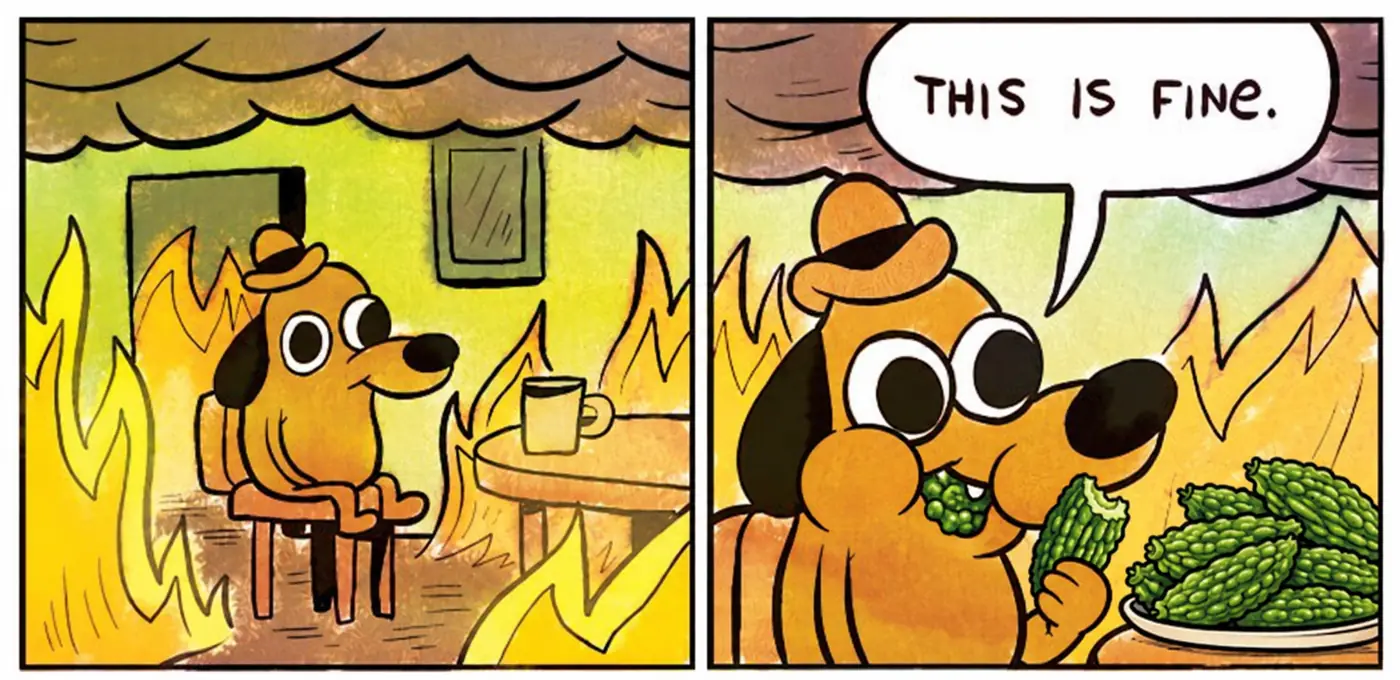
The house is on fire, so the dog eats more bitter melon. In Chinese, eating bitterness (吃苦) and eating bitter melon (吃苦瓜) are nearly the same words. Neither one puts out a fire.
房子着火了,于是狗多吃了几根苦瓜。吃苦和吃苦瓜,只差一个字,哪个都灭不了火。
After “On Fire” by KC Green (2013), edited. · 改编自 KC Green 的漫画。
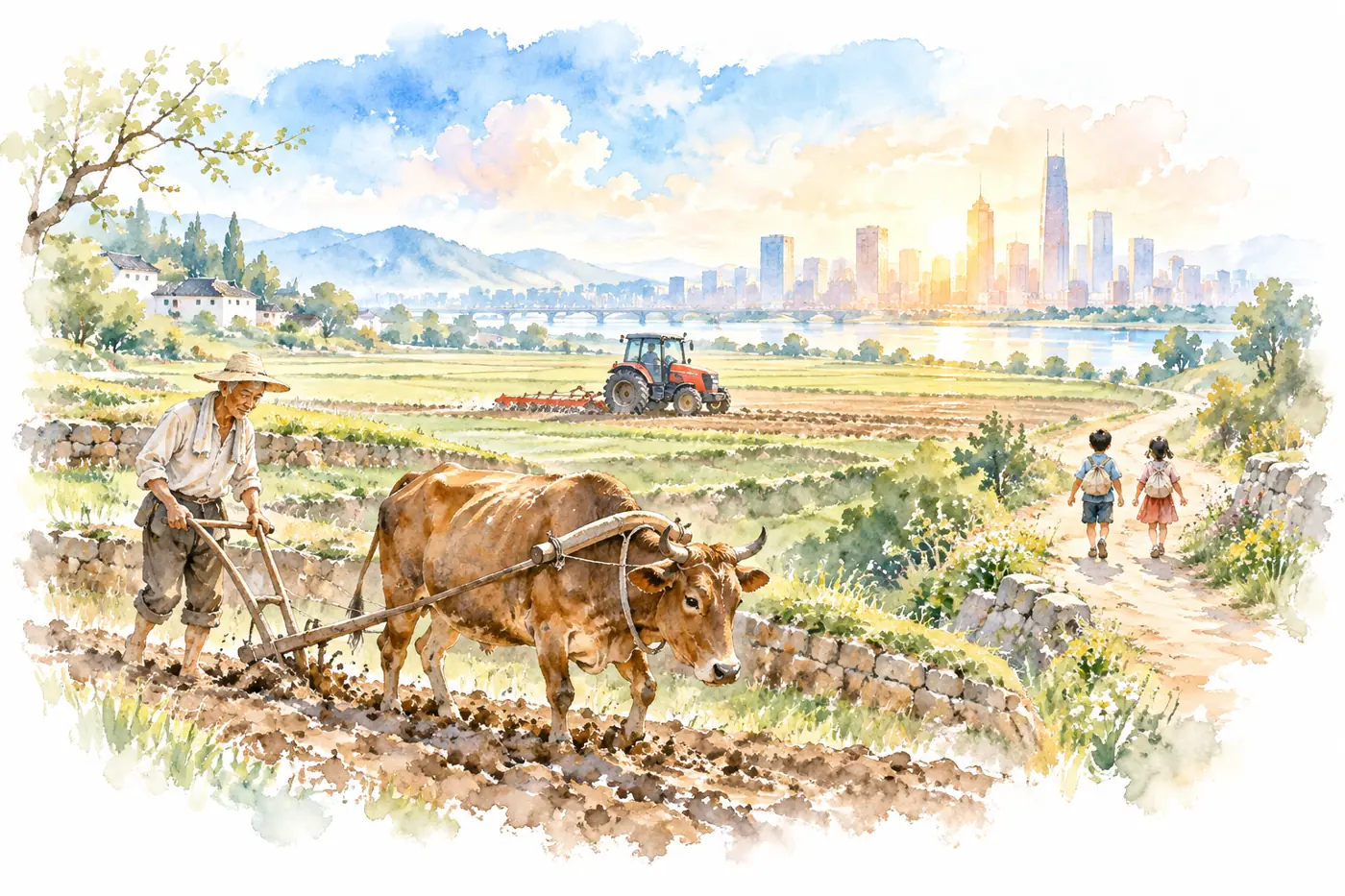
And the twist is that eating bitterness really did work, for a long time. A century of farmers, a generation of gaokao students, parents who built a middle class out of nothing: their bitterness paid. But not because pain is valuable. It paid because the return on their effort was positive. In an economy short of skills and roads and factories, every extra hour built something. The bitterness was the cost. The return came from the investment.
反转在于:吃苦确实管用过,而且管用了很久。一百年来的农民、一整代高考生、从无到有挣出一个中产阶级的父母:他们的苦换来了回报。但不是因为痛苦本身有价值,而是因为他们努力的回报率是正的。在一个缺技能、缺路、缺工厂的经济里,每多干一小时都能建起点什么。苦是成本,回报来自投资本身。
Children used to be part of that return. On a farm, a child was an extra pair of hands by seven and the family's pension by forty. Family needs and economic needs pointed the same way: more children meant more labor and more security in old age. In a city apartment the arithmetic flips. A child is mostly cost, for decades, and the return a family can see is status: the school, the score, the degree, a job title you can say out loud at a banquet. The instinct to put everything into children survived the move to the city. The return that justified it didn't.
孩子曾经也是这份回报的一部分。在农村,孩子七八岁就是一双帮手,到父母老了就是全家的养老金。家庭的需要和经济的需要指向同一个方向:多一个孩子,就多一份劳力,多一份养老的保障。到了城市的公寓里,这笔账翻转了。孩子主要是成本,而且一花就是几十年;家里看得见的回报,变成了面子:学校、分数、文凭,一个能在饭桌上说出口的头衔。把一切押在孩子身上的本能,跟着人进了城;支撑这份本能的回报,却没有跟进来。
Farmers learned it first. In 1900 more than a third of American workers farmed; today it's fewer than two in a hundred. The families who did well didn't plow harder. They moved to where the return was.
农民最先学到这一课。1900 年,美国三分之一以上的劳动者在务农;今天,不到百分之二。过得好的家庭没有更用力地耕地,而是去了回报更高的地方。
When the return turns negative, the cost stays. Goodhart's law says that when a measure becomes a target, it stops being a good measure. When pain becomes the measure of worth, it stops measuring worth. And the myth has a second line of defense: we only hear from the planes that came back.
当回报变成负的,成本却还在。古德哈特定律说:当一个指标变成目标,它就不再是好指标。当痛苦成了衡量价值的尺子,它就不再衡量价值。这个神话还有第二道防线:我们只听得到飞回来的飞机的故事。
The planes that came back飞回来的飞机
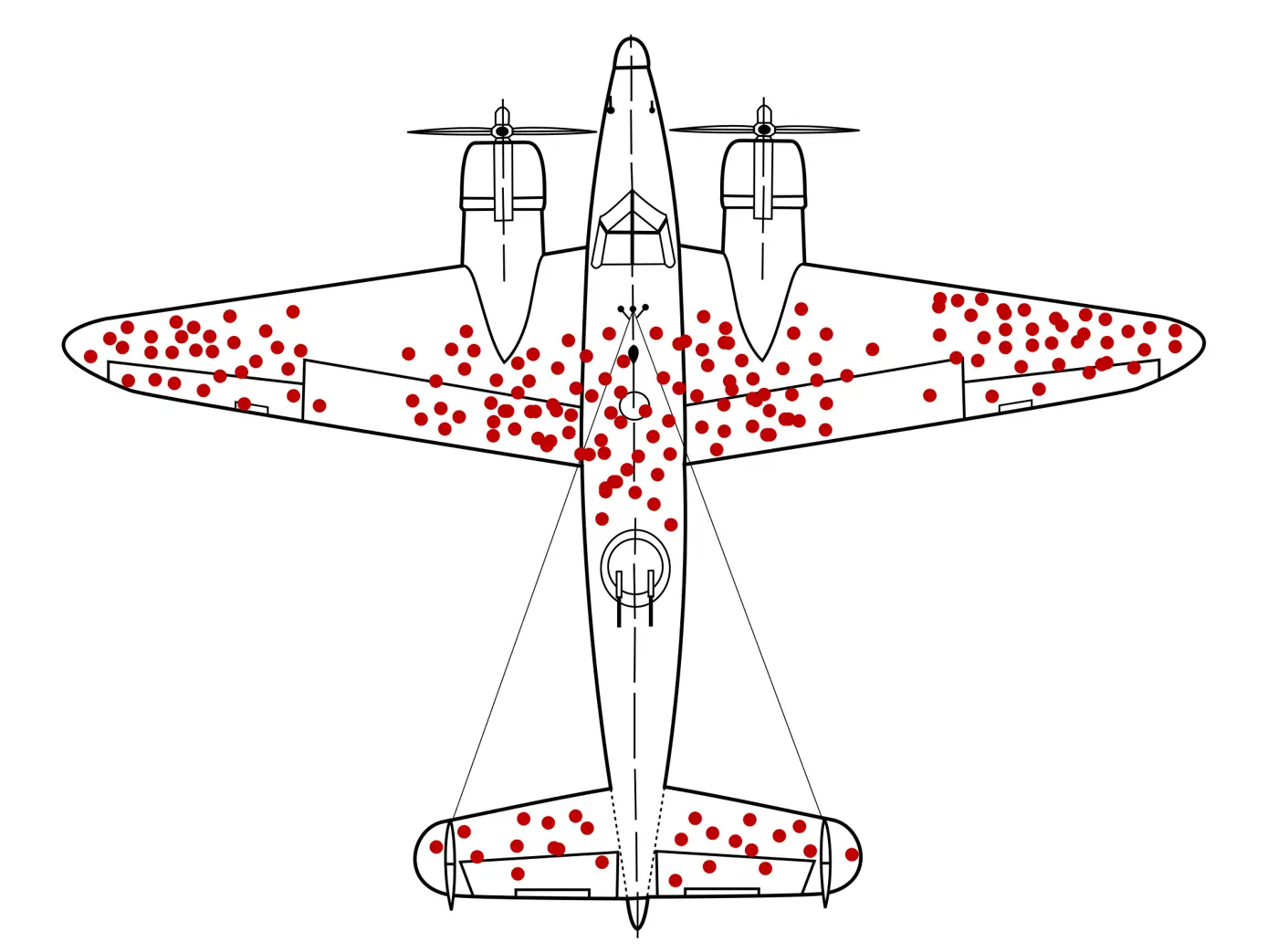
In World War II, Abraham Wald's statistics group was asked where to add armor to bombers, based on where the returning planes had bullet holes. Wald's answer: armor the places with no holes. Planes hit there never came back.
二战时,统计学家亚伯拉罕·沃尔德的小组被问到:根据返航轰炸机身上的弹孔,该在哪里加装甲?沃尔德的回答是:加在没有弹孔的地方。那些地方中弹的飞机,根本没能飞回来。
Diagram: Martin Grandjean, McGeddon and the US Air Force, CC BY-SA 4.0, via Wikimedia Commons. · 图片来源:维基共享资源,CC BY-SA 4.0。
None of this makes the parents fools. They were the best investors of their era: they bought hard work at the bottom, when it was cheap, and it paid off enormously. Chesterton's fence says don't tear a fence down until you know why it was built. This one was built against scarcity. Knowing why it was built is also how you notice when the scarcity has moved.
这一切都不说明父母是傻瓜。他们是那个时代最好的投资者:在底部、在吃苦还便宜的时候买入,回报巨大。切斯特顿的篱笆说:在知道一道篱笆为什么建起来之前,不要拆掉它。这道篱笆是为了抵御匮乏而建的。知道它为什么而建,你也就能察觉匮乏何时已经挪了地方。
When pain becomes the measure of worth, it stops measuring worth.
当痛苦成了尺子
它就不再衡量价值
Wu wei: getting paid not to do the wrong thing.
无为:因为不做错事而得到报酬。
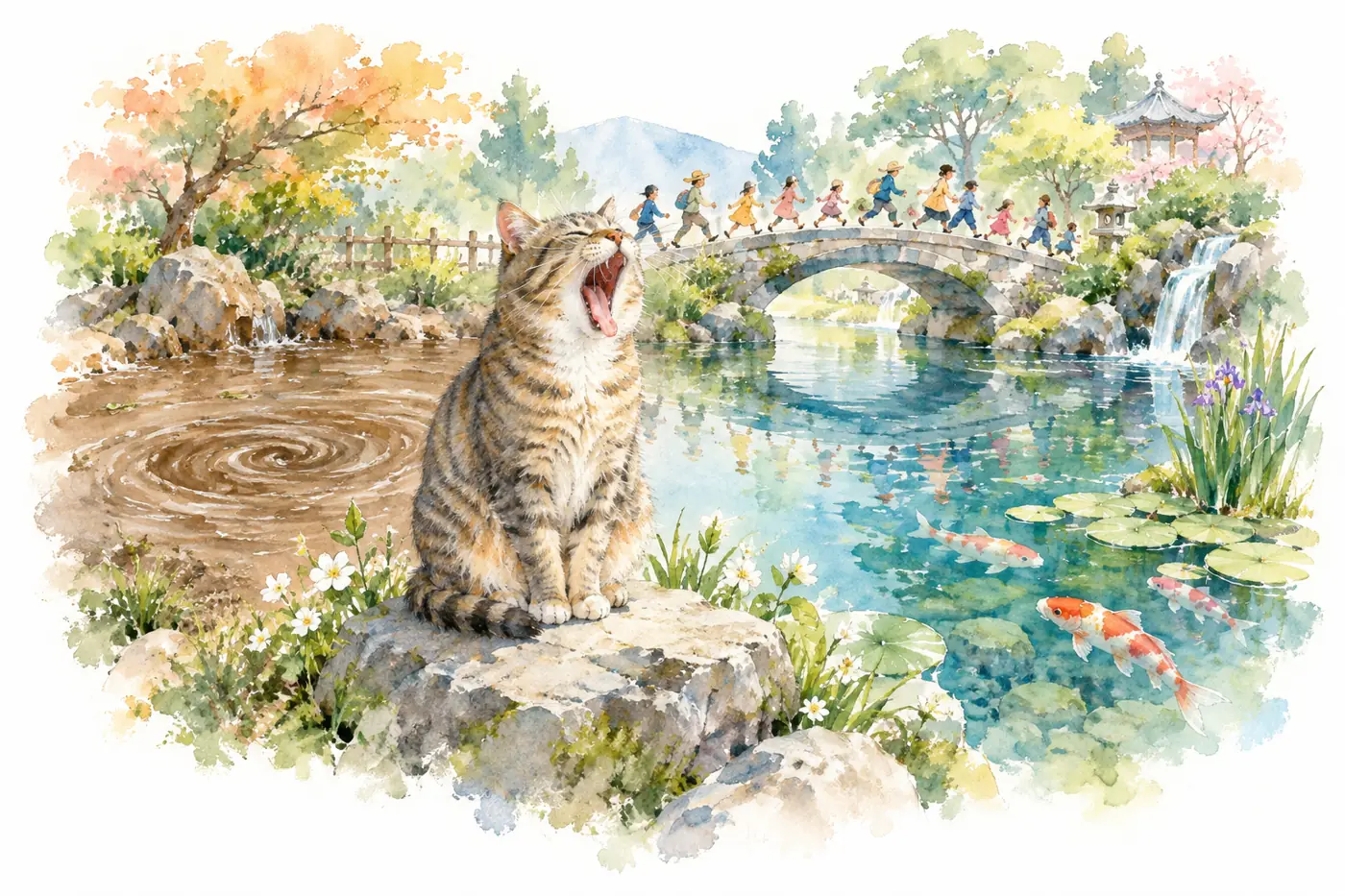
The culture under the most pressure to act also wrote the best words against it. Govern a great country the way you fry a small fish: keep flipping it and it falls apart. Who can make muddy water clear? Let it be still. Charlie Munger said it in an American accent: the big money is not in the buying and selling, but in the waiting.
承受最大行动压力的文化,恰恰写下了反对它的最好的话。治大国若烹小鲜:翻来覆去,鱼就碎了。孰能浊以静之徐清:让浑水静下来,它自己会清。查理·芒格用美式说法讲过同一件事:大钱不在买卖之中,而在等待之中。
Muddy water浊水
Try doing nothing · 试试什么都不做能忍住不动
The rarer strength is holding still.
Who can make muddy water clear? Let it be still. Stop scrolling and take your hand off the mouse or the screen. Anything you do stirs it up again.
孰能浊以静之徐清?停止滚动,手离开鼠标或屏幕。你做的任何动作,都会把它重新搅浑。
Wu wei doesn't mean doing nothing. It means not forcing, and in markets, not forcing gets paid. Gold is the purest case. It yields nothing, builds nothing and does nothing, and over long stretches it has held its value while the things people rushed into didn't. Gold pays you for exactly one thing: not doing the wrong thing. In the economist Albert Hirschman's terms, it's exit rather than voice. Instead of staying in a failing game and pushing harder to change it, you quietly step out, and the asset pays you for leaving. China's Gen Z seems to have rediscovered this on its own, collecting one-gram gold beans in little jars.
无为不是什么都不做,而是不强求。在市场里,不强求是有报酬的。黄金是最纯粹的例子:它不生利息,不建造任何东西,什么也不做,可在很长的时间里,当人们一窝蜂冲进去的东西纷纷贬值时,它守住了价值。黄金只为一件事付钱给你:不做错的事。用经济学家赫希曼的话说,这是“退出”而不是“发声”:不是留在一场失败的游戏里使劲推着它改变,而是悄悄离场,而这件资产为你的离场付钱。中国的 Z 世代似乎自己重新发现了这一点:用小罐子攒一克一克的金豆。
Somewhere along the way, the culture that wrote the Dao De Jing came to treat stillness as a moral failure. Call it the striver curse. It begins as good sense. In a poor family, rank is safety, and the exam is the one door the family can push on. So the child learns a few rules early: if I rank well, I am real. If I fall behind, I endanger the family story. If I rest, someone else is turning my rest into their advantage.
不知从何时起,写下《道德经》的文化,开始把安静当成一种道德缺陷。不妨叫它奋斗者诅咒。它一开始是明智的:在穷人家,排名就是安全,考试是全家唯一推得动的门。于是孩子很早就学会了几条规则:排名靠前,我才算数;掉了队,就会毁掉家里的故事;我一休息,别人就在把我的休息变成他们的优势。
The curse is that the rules outlive the poverty. Every gate opens onto a waiting room for the next gate: the good school, then the good job, then the apartment, then the second apartment. Winning never turns into safety, only into a ticket for the next tournament. Rest feels faintly disgusting, like falling behind in real time. The striver isn't chasing success. He can't stop, and he has been taught to call that inability a virtue.
诅咒在于,这些规则比贫穷活得更久。每过一道门,门后都是下一道门的候诊室:好学校,然后好工作,然后一套房,然后第二套。赢了也变不成安全,只变成下一场比赛的入场券。休息让人隐隐恶心,像是在实时掉队。奋斗者追的不是成功,而是停不下来,还被教会了把这种停不下来叫做美德。
It isn't only China. Singapore runs another version of the same machine, and the Singaporean writer Hoeflator has described it from the inside. Children “fight in the books with other 12 year olds for your PSLE examinations,” the exam that sorts them at twelve. Adults are “far too busy trying to make your iron rice bowl to paint, write poetry, or spend hours on an instrument.” His verdict: “In scarcity, the mind cannot flourish, and the brain cannot bloom.” The cycle closes on the next generation, as the middle class buys condo after condo, “banking on the next generation in line to be the exit liquidity.” Korea runs the same machine with cram schools, Silicon Valley with performance reviews. The rules are local. The waiting room is the same everywhere.
这不只是中国的事。新加坡运转着同一台机器的另一个版本,新加坡写作者 Hoeflator 从里面描述过它。孩子们要“在书本里和其他十二岁的孩子厮杀,争夺小六会考(PSLE)”,那场考试在十二岁就把人分好了类。大人们“忙着端稳自己的铁饭碗,没空画画、写诗,或者花几个小时练一件乐器”。他的结论是:“在匮乏中,心灵无法生长,头脑无法绽放。”而这个循环最后落在下一代身上:中产一套接一套地买公寓,“指望排在后面的下一代来接盘”。韩国用补习班运转这台机器,硅谷用绩效考核。规则各地不同,候诊室却到处都一样。(引文原文为英文。)
Then there's the counterfeit. From the middle of the curve, 躺平, lying flat, looks just like wu wei: both do less. But lying flat walks away from the table. No bets, no allocation, a quiet refusal, and your options expire worthless. Wu wei stays at the table and stops forcing: small bets, capped downside, open upside, held long enough to matter.
然后是赝品。从曲线中间看过去,躺平很像无为:两者都做得更少。但躺平是离开牌桌:不下注、不配置、安静地拒绝,你的期权到期作废。无为是留在牌桌上、不再强求:下小注,下行有限,上行敞开,拿得足够久。
The bell curve钟形曲线
The original meme · 原版梗图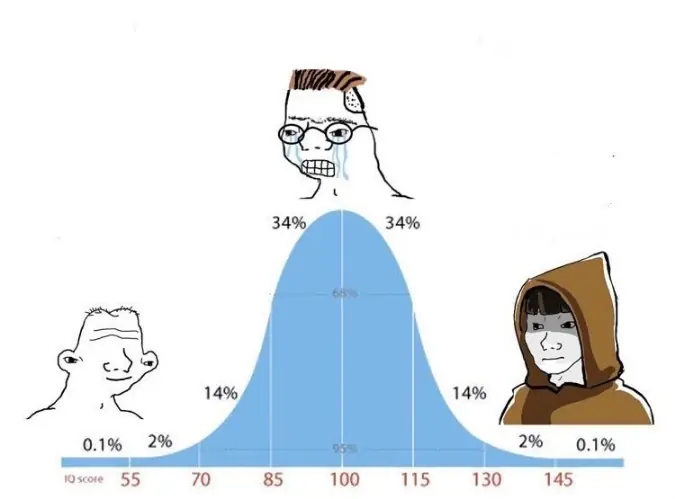
I'm lying flat.我躺平了。
NO!! You must 996, get a second master's, open a boba shop and eat MORE bitterness!!不行!!要 996、再读个硕士、开奶茶店,吃得苦中苦!!
Hold. Size small. Wait.拿住。仓位小一点。等。
From the middle, the two ends look the same. They aren't. The left one left the table. The right one is still holding.
从中间看,两端长得一样。其实不一样:左边那位离开了牌桌,右边那位还拿着。
Lying flat sells your options. Wu wei holds them.
躺平是把期权白白送掉
无为是把期权拿住

The boat was already there.
船早就来了。

There's an old joke about a man caught in a flood. He climbs onto his roof and prays for God to save him. A rowboat comes by, and he waves it away: God will save me. A motorboat comes, and he waves that away too. A helicopter lowers a ladder, and he refuses. He drowns. In heaven he asks God why He didn't help. God says, “I sent you two boats and a helicopter. What more did you want?”
有个老笑话。一个人被洪水困在屋顶上,祈祷上帝来救他。一条小船划过来,他摆摆手:“上帝会救我的。”一艘汽艇开过来,他又拒绝了。一架直升机放下绳梯,他还是不上。他淹死了。到了天堂,他问上帝为什么不救他。上帝说:“我给你派了两条船和一架直升机,你还想要什么?”
The boats are already here. Anyone with a brokerage account can own a slice of the systems that are squeezing them. Instead of opening the eleventh tea shop, you can own shares in the company that sells syrup and cups to all ten. Mixue, the chain behind tens of thousands of franchised shops, listed in Hong Kong in 2025, and almost all of its revenue comes from selling goods and equipment to its franchisees. On the boba street some owners win and some lose; the supplier gets paid either way. At the scale of a nation, the Three Gorges Dam is run by a listed company, China Yangtze Power. For a few thousand yuan, a family can own a sliver of the largest power station on earth and collect its dividends.
船早就到了。任何一个有证券账户的人,都可以拥有那些正在挤压他们的系统的一小块。与其开第十一家奶茶店,不如持有那家给十家店卖糖浆和杯子的公司的股票。蜜雪冰城背后是数万家加盟店,2025 年在香港上市,几乎全部收入都来自向加盟商卖货和设备。在奶茶街上,有的店主赚,有的店主亏,供应商两头都收钱。放到国家的尺度,三峡大坝由上市公司长江电力运营。几千块钱,一个家庭就能拥有世界上最大的电站的一小片,领它的分红。
Not investment advice. Companies and funds are named only to illustrate an idea, not as recommendations. Any investment can lose money, and past returns don't predict future ones.
本文不构成投资建议。文中提到的公司和资产只用于说明观点,并非推荐。任何投资都可能亏损,过往表现不代表未来收益。
Why wave the boats away? Partly because they don't look like rescue: owning things doesn't hurt enough to feel like work. And partly because we're waiting for a different miracle: the next new thing, the startup that will “put a dent in the universe,” the one big break. Seeing a boat for what it is takes quieter virtues: attention to what is actually in front of you, gratitude for it, and the humility to accept a slow, boring rescue.
为什么要把船推开?一部分原因是,它们看起来不像救援:“拥有”不够痛,不像在干活。另一部分原因是,我们在等另一种奇迹:下一个风口,那家要“在宇宙里留下印记”的创业公司,那一次翻身的机会。要看清一条船是船,需要几种更安静的品质:留意眼前真实存在的东西,为它心怀感恩,以及接受一场缓慢、无聊的救援的谦卑。
Deadlines make it worse. When you need a certain amount of money by a certain age, enough for the apartment before the wedding, or to have “made it” by thirty-five, a steady 20% a year looks like failure. It would turn 100,000 into more than 600,000 in ten years, but not by the deadline. So people reach for the Hail Mary: leverage, meme coins, the all-in. These bets often lose money on average. They only make sense if missing the deadline feels like death. When a life is organized around milestones a few years apart, volatility starts to look rational even when its expected return is negative.
截止日期让事情更糟。当你需要在某个年龄之前攒到某个数,在婚礼之前买房,在三十五岁之前“成功”,每年稳定 20% 的回报看起来就像失败。它能在十年里把 10 万变成 60 多万,却赶不上期限。于是人们伸手去够孤注一掷的打法:加杠杆、炒币、梭哈。这些押注平均下来往往是亏钱的,只有当错过期限感觉像死亡时才说得通。当人生被几年一个的里程碑切开时,波动看起来很理性,哪怕它的期望回报是负的。
Chinese investors already have a word for what usually happens next: 韭菜, chives. Retail investors are the crop. Every boom grows them, every bust cuts them down, and they grow back for the next harvest. The cynical conclusion is that the market is a casino run for insiders. But look at who gets cut. It is rarely the patient owner of something boring, holding a slice of the dam for ten years. It is the person who chased last month's winner, bought on a tip, borrowed to do it, and sold in a panic. Chives get harvested because they all grow to the same height at the same time. It's a crowded trade again. The market harvests behavior, not ownership.
接下来通常会发生什么,中国股民早就有个词:韭菜。散户就是那茬庄稼:每一轮牛市把他们养大,每一轮熊市把他们割掉,割完再长,等着下一次收割。犬儒的结论是:股市就是给内部人开的赌场。但看看被割的是谁。很少是那个耐心持有一样无聊东西的人,比如拿着一小块三峡大坝十年不动;而是追上个月涨得最好的那只股、听消息买、借钱买、再在恐慌中卖掉的人。韭菜之所以被割,是因为它们在同一时间长到同一个高度:又是一笔拥挤的交易。市场收割的是行为,不是持有。
From the outside, the chive and the patient owner look identical, and so do investing and gambling. Both buy assets, take risk and stare at prices. What separates them is what wuxia novels call 心法, the inner method behind the moves: how much to bet, how long to hold, and the first rule of every martial art, which is don't die. Practicing the moves without the method has a name too. 走火入魔: the fighter torn apart by his own power.
从外面看,韭菜和耐心的持有者长得一模一样,投资和赌博也是:都在买资产,都在承担风险,都在盯着价格。分开两者的,是武侠小说里说的心法,也就是招式背后的内功:押多少,拿多久,以及所有武功的第一条规矩:别死。只练招式不练心法,也有一个名字:走火入魔。
The expanding brain of a retail investor散户的大脑进化
The original meme · 原版梗图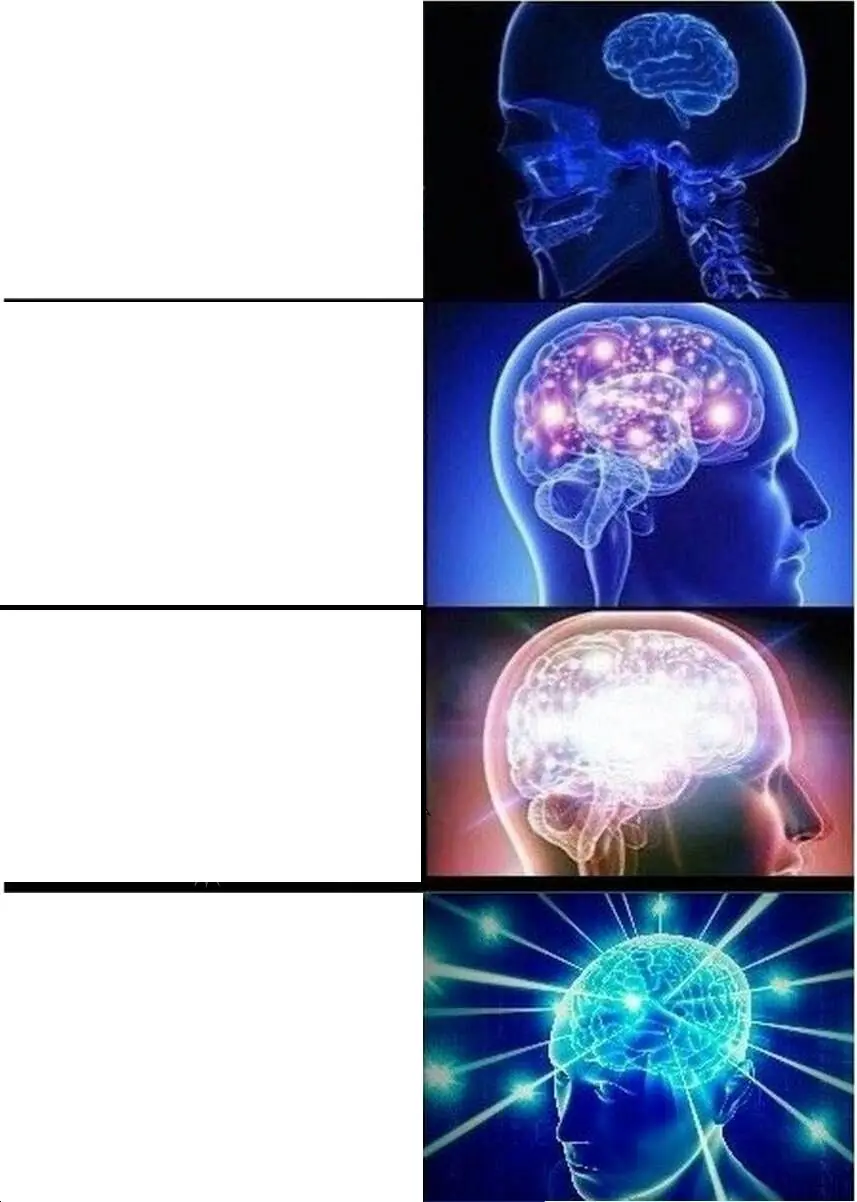
Keep everything in the bank.全存银行。
Day-trade options on the subway.地铁上炒期权。
10× leverage on a dog coin. Must make it by 35.十倍杠杆梭哈狗狗币,三十五岁前必须上岸。
Buy a slice of the dam. Forget the password. Go outside.买一小块三峡大坝,忘掉密码,出门走走。
 The red line那条红线
Each line is one family starting with 100, followed for ten years. Families who ignore the red line invest steadily. Families who believe that only a life above it counts play a slot machine every month until they cross the line. Slide how many believe.
每条线是一个起步资产为 100 的家庭,跟踪十年。无视红线的家庭稳稳复利;相信“只有线上的人生才算数”的家庭,每个月都去拉一次老虎机,直到越过红线为止。拖动滑块,改变相信红线的人数。
Model: steady families earn about 7% a year with 12% volatility. Each month, families below the red line stake 5% of their wealth on a slot machine that pays 18× with a 5% chance. Each pull returns 90 cents per dollar on average, so the odds are against them. The moment a family crosses the line, it stops gambling and invests like everyone else. There is no floor and no forced cut-off: the shape comes from the odds alone. Illustrative numbers. · 模型:稳健家庭年化回报约 7%,波动 12%。红线以下的家庭每月拿出财富的 5% 拉一次老虎机,5% 的概率赢 18 倍。每拉一次平均只拿回九成,赔率对他们不利。一旦越过红线,就停止赌博,和其他人一样投资。没有人为设置的下限或截断:形状完全来自赔率本身。数字为示意。
The boat is already here. Get in, slowly.
船早就来了
慢慢上船

Eat people, or save the children.
吃人,还是救救孩子。
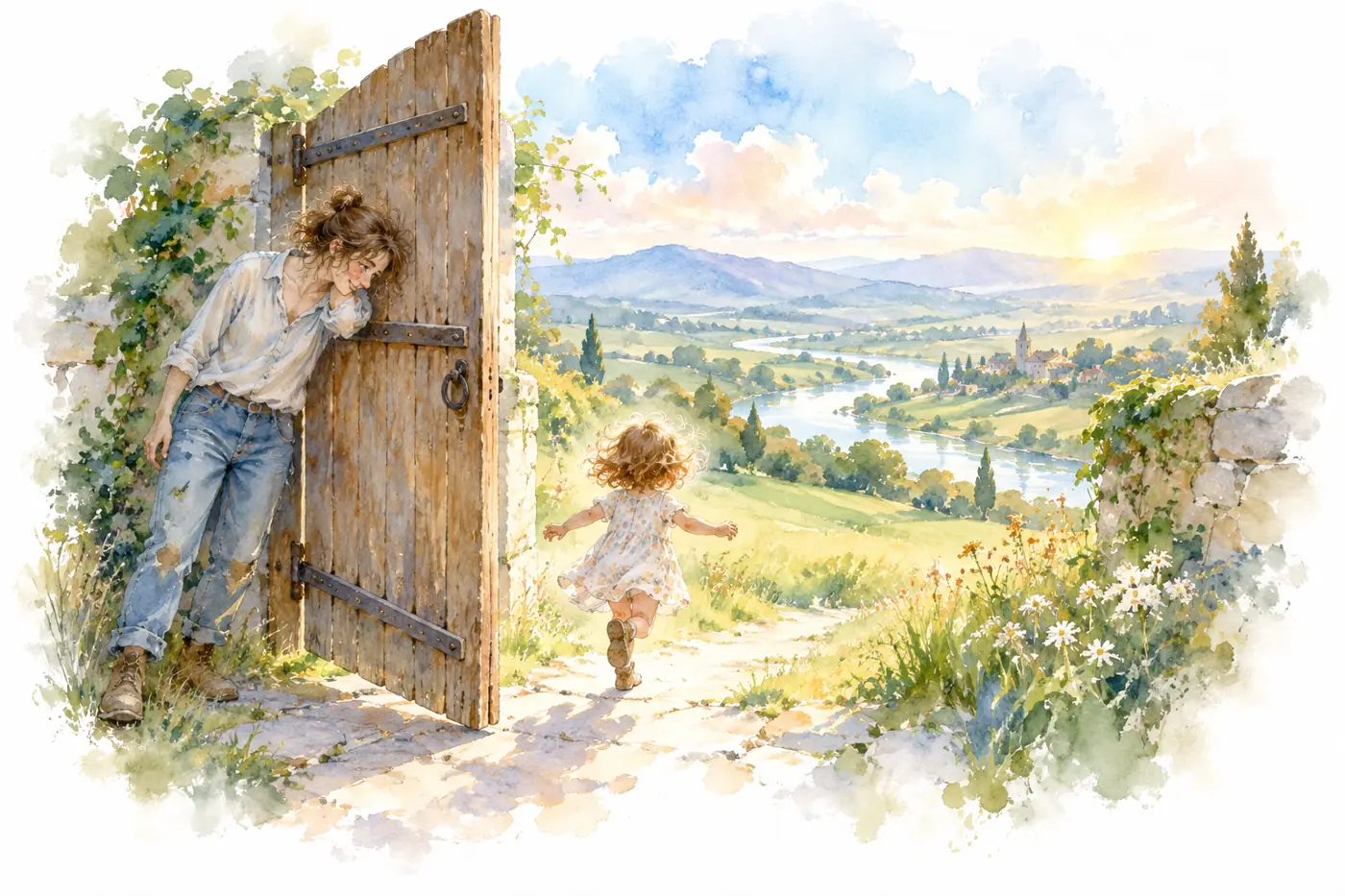
Run the opening bet again, the other way. The family keeps the apartment as its floor. Part of the savings goes into things that keep working while everyone sleeps: a slice of the dam, a slice of the syrup company, a jar of gold beans. The rest goes on a few small bets on what the child is actually drawn to, cheap to try and cheap to drop. When computer science turns out not to fit, nobody calls the child lazy. A bad fit is market risk, not a moral failing.
把开头那一注,反过来再走一遍。家里留住房子,那是底线。一部分积蓄放进睡觉时也在工作的东西里:一小块三峡大坝、一小块卖糖浆的公司、一罐金豆。剩下的钱,下在孩子真正感兴趣的几个方向上,试错便宜,放弃也便宜。当计算机不适合这个孩子时,没人说他懒。不合适是市场风险,不是道德缺陷。
In 1918, Lu Xun published “A Madman's Diary.” Its narrator opens the history books and finds every page covered with the words “benevolence, righteousness and morality.” Unable to sleep, he reads between the lines all night and finds two words written everywhere: 吃人, eat people. A system that eats people doesn't look cruel from the inside. It looks like love, duty and sacrifice. The child is fed, educated and loved, and also turned into the family's pension, its status, and its proof that the suffering meant something.
1918 年,鲁迅发表了《狂人日记》。狂人翻开历史,每页上都写着“仁义道德”几个字;他横竖睡不着,从字缝里看出满本都写着两个字:吃人。吃人的制度,从里面看并不残忍,它看起来像爱、责任和牺牲。孩子被喂饱、被教育、被爱,同时也被变成了家里的养老金、面子,以及“苦没有白吃”的证明。
A year later, in an essay on how fathers should raise their children, Lu Xun described the way out: a parent who carries the burden of the past, “shoulders the gate of darkness,” and lets the children through “to a wide and bright place.” Everything you hold is capital. You are not, and neither is your child. You can invest in a child. You can't own one.
一年后,鲁迅在《我们现在怎样做父亲》里写下了出路:做父母的,“自己背着因袭的重担,肩住了黑暗的闸门,放他们到宽阔光明的地方去”。你拥有的一切都是资本,但你不是,你的孩子也不是。你可以投资一个孩子,但你不能拥有他。
Breaking the cycle is the point of all of this. The striver curse passes down because each generation pays its children in pain and calls it love. Involution reproduces because everyone is too exhausted to step out of the crowded trade. When a child counts as a failure unless she escapes ordinary life, fewer people want to enroll one in the tournament at all. The machines are finally offering a way out of the grind. The hard part is accepting it, and letting our children accept it too.
打破这个循环,是这一切的意义。奋斗者诅咒一代代传下去,是因为每一代都用痛苦支付孩子,还把它叫做爱。内卷不断复制,是因为每个人都累得走不出那笔拥挤的交易。当一个孩子除非逃离平凡生活、否则就算失败时,越来越少的人愿意替孩子报名这场锦标赛。机器终于给了我们一条走出苦活的路。难的是接受它,也让我们的孩子接受它。
“A Madman's Diary” ends on a question and a plea. “Perhaps there are still children who have not eaten people? Save the children.”
《狂人日记》的结尾,是一个问题和一句恳求:“没有吃过人的孩子,或者还有?救救孩子……”
Save the children.
救救孩子
What to do on Monday 周一该做什么
In this order · 按这个顺序- 一
Build a floor. Enough savings and health that one bad month can't send you to zero.
先建底线。攒够储蓄、养好身体,让一个糟糕的月份不至于让你归零。
- 二
Check the crowd. Before a degree, a shop or a city, ask who else is buying it right now.
看看人群。在选文凭、开店、选城市之前,先问:现在还有谁在买?
- 三
Price the frontier. Before spending on anything a model might do next year, ask whether your edge beats waiting.
给前沿定价。在花钱做明年模型可能就会做的东西之前,先问:你的优势跑得赢等待吗?
- 四
Own a slice of what squeezes you. Small, boring, diversified, held. Learn the 心法 before the moves.
拥有挤压你的东西的一小块。小额、无聊、分散、拿住。先练心法,再练招式。
- 五
Hold still. Make small convex bets, then let the muddy water settle.
静下来。下几注凸性的小注,然后让浑水自己变清。
This is a way of thinking, not a plan for your money. Not investment advice. Companies and funds are named only to illustrate an idea, not as recommendations. Any investment can lose money, and past returns don't predict future ones.
这是一种思考方式,不是你的理财方案。本文不构成投资建议。文中提到的公司和资产只用于说明观点,并非推荐。任何投资都可能亏损,过往表现不代表未来收益。